
Acupuncture Business Tips
Does Acupuncture Hurt? Tips To Set Client Expectations

Before a patient ever books, they’re usually doing one thing first: Googling, “Does acupuncture hurt?”
They may also search “is acupuncture painful” or “what does acupuncture feel like.” And whether they tell you or not, their answer to that question often determines whether they schedule or quietly move on.
Fear of pain shouldn’t stop someone from experiencing the benefits of acupuncture. But if we don’t address it clearly and confidently, it often does.
For clinic owners, this isn’t just a curiosity question. It’s a conversion question. It affects booking rates, first-visit anxiety, no-shows, and long-term retention. Patients don’t cancel because acupuncture is painful. They cancel because they’re uncertain about what to expect.
The good news? Setting realistic patient expectations around acupuncture sensations is simple when it’s intentional.
In this guide, we’ll break down:
- Why patients worry about acupuncture discomfort
- What acupuncture usually feels like (in clear, patient-friendly terms)
- When mild discomfort can happen
- How to build expectation-setting into your website, booking flow, intake forms, and first visits
When you proactively educate, you reduce anxiety. And when you reduce anxiety, you build trust before the first needle is ever placed.
TL;DR: Patients often search “does acupuncture hurt” before they book. Most people report very little pain, though some points may cause brief, mild sensations like pressure or a dull ache. Clear expectation-setting in your website content, online booking flow, intake forms, first visits, and follow-up emails reduces anxiety, lowers cancellations, and improves conversions.
Why Patients Ask, “Does Acupuncture Hurt?”
When someone searches “does acupuncture hurt” or “is acupuncture painful,” they’re rarely asking about pain alone.
They’re asking:
- Are these needles like the ones at the doctor’s office?
- What will this feel like?
- Will I lose control?
- What if I can’t handle it?
- Is this actually safe?
For many first-time patients, acupuncture triggers two common fears: needles and the unknown.
Even though acupuncture needles are extremely thin and solid (not hollow like injection needles), the visual association alone can create anxiety. Add in unfamiliar terminology like “de qi” or “energy flow,” and uncertainty increases.
It’s important to acknowledge that this hesitation is normal. In fact, it’s healthy. Patients are assessing safety before trying something new.
From a clinical perspective, acupuncture has a strong safety record when performed by licensed professionals using sterile, single-use needles. Most patients report little discomfort, often describing a brief pinch, light pressure, tingling, warmth, or a dull ache rather than sharp pain.
But sensation does vary.
That variability is exactly why expectation-setting matters. If a patient expects “no feeling at all” and experiences a mild ache, they may interpret it as something going wrong. If they’re told ahead of time that certain acupuncture sensations are normal and short-lived, the same experience feels reassuring instead of alarming.
Your job isn’t to promise zero sensation.
It’s to replace uncertainty with clarity.
What Acupuncture Usually Feels Like: Sensations Explained
When patients search “what does acupuncture feel like,” they’re usually imagining sharp pain.
In reality, most acupuncture sensations are mild, brief, and very different from an injection at a doctor’s office.
Here’s how to explain it clearly and confidently.

Common Acupuncture Sensations
Most patients report one of the following:
- A brief pinch or light pressure at insertion
- Tingling or warmth around the needle site
- Heaviness or a dull ache (often associated with the “de qi” response)
- No sensation at all
That’s it.
Sharp, ongoing pain is not typical. And when sensation does occur, it’s usually short-lived.
Explaining “De Qi” in Plain Language
You don’t need to teach Traditional Chinese Medicine theory.
If you reference “de qi,” keep it simple:
- It may feel like pressure, fullness, or a mild ache
- It’s often described as deep rather than sharp
- It typically fades quickly
Framing matters. When patients expect zero sensation and feel something new, they may interpret it as something going wrong. When you normalize common acupuncture sensations ahead of time, the same experience feels reassuring.
Teach the Spectrum, Not a Guarantee
Avoid promising that acupuncture won’t be felt at all.
Instead, present it as a spectrum:
- No sensation
- Mild awareness
- Pressure or heaviness
- Brief ache
- (Rarely) short-lived discomfort
This approach protects trust. It aligns patient expectations of acupuncture with real-world variability.
Pro Tip for Practitioners
Replace clinical terminology with patient language.
Instead of: “You may experience de qi.”
Try: “You might feel a little heaviness or pressure. That’s common and usually fades quickly.”
A clear explanation reduces anxiety. Reduced anxiety increases confidence. And confident patients are far more likely to book and return.
When Acupuncture Can Feel Uncomfortable
While most patients report little to no pain, there are situations where a treatment may feel stronger than expected. Addressing this directly supports better patient education for acupuncture and builds trust.
Here are the most common factors.
More Sensitive Areas of the Body
Some points naturally feel more intense than others. This can include:
- Hands and feet
- Areas near joints
- Points located in already tight or inflamed tissue
These areas tend to produce stronger acupuncture sensations because of local nerve sensitivity.
Experienced practitioners usually anticipate this and provide context: “This area can feel a little stronger. Let me know how it feels.”
That small cue reduces surprise and supports positive patient expectations acupuncture.
If needed, intensity can often be adjusted or a different point selected.
A Heightened Nervous System
Patients who are anxious, highly stressed, or living with chronic pain may perceive acupuncture discomfort more intensely.
That doesn’t mean acupuncture is painful. It means their nervous system is already sensitized.
Slower insertions, fewer needles, and consistent check-ins can dramatically shift the experience. Many practitioners also notice that as patients begin to relax during treatment, sensations decrease.
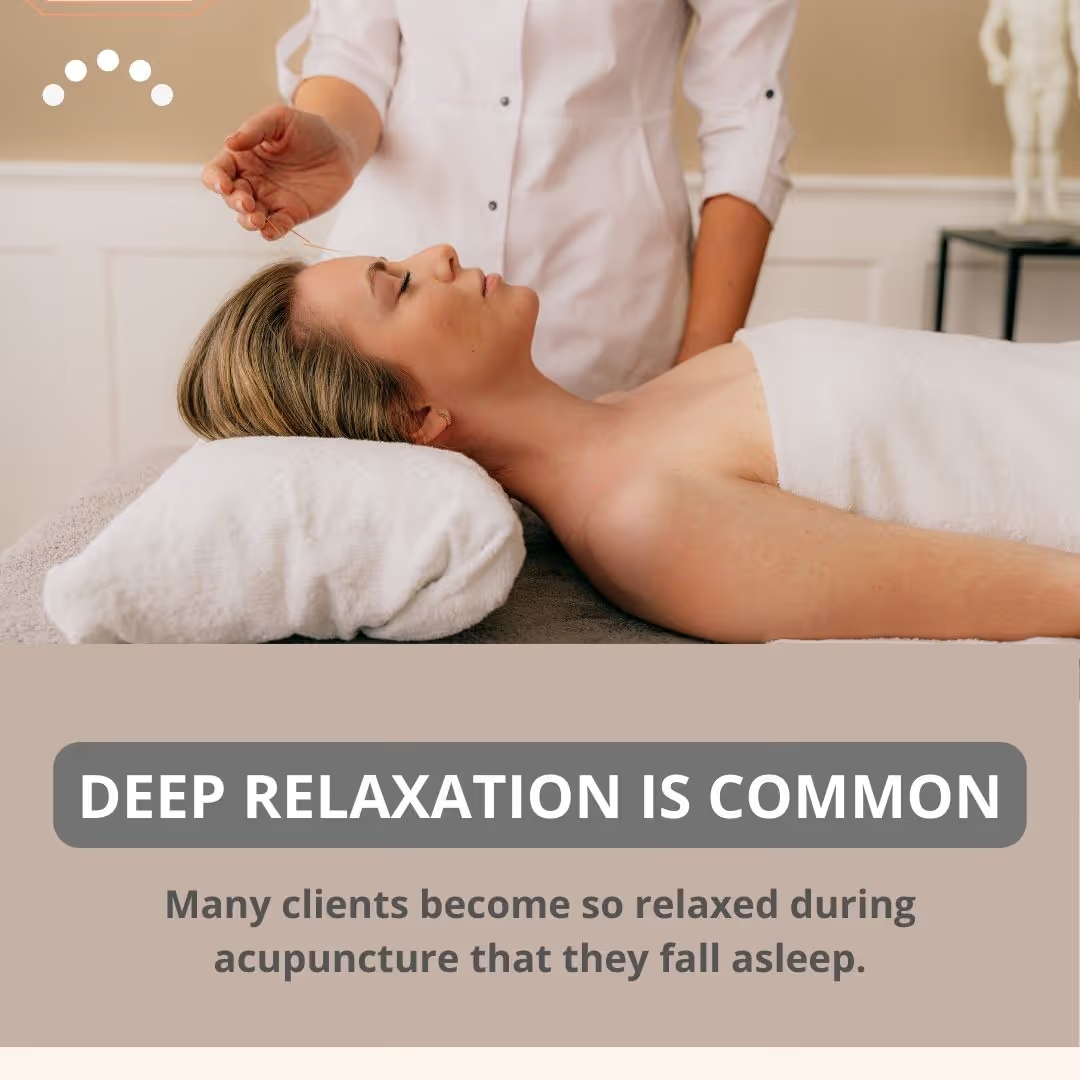
In fact, it’s common for clients to become deeply relaxed, sometimes even falling asleep. As the body shifts into a calmer state, perception of discomfort typically drops as well.
This is an important point to communicate during an acupuncture first visit.
A Strong Therapeutic Response
Some patients experience a deeper, dull ache, pressure, or heaviness when a point activates. This is often described as unusual but not sharp.
It should be:
- Brief
- Adjustable
- Communicated about
If sensation lingers or feels sharp, repositioning is appropriate.
Framing this clearly reinforces acupuncture safety without overstating risk.
The Communication Standard
Avoid absolute language like: “It doesn’t hurt.”
Avoid dramatic language like:“Some spots can be painful.”
Instead, use steady, accurate phrasing: "Most people are surprised by how little they feel. Occasionally a point may feel stronger for a moment, and we can always adjust.”
That tone answers “is acupuncture painful” honestly, without increasing fear.
How to Set Client Expectations (And Reduce Anxiety Before It Starts)
If patients are searching “does acupuncture hurt” before they book, expectation-setting must start before the appointment.
It needs to be built into your systems, not improvised in the treatment room.
Here’s how to structure it.
Pre-Booking Communication
Your website and FAQs should clearly answer:
- What to expect your first session
- Does acupuncture hurt?
- What does acupuncture feel like?
- Is acupuncture painful the first time?
Use steady, realistic language. Avoid absolutes.
Connect sensation to value by reinforcing the benefits of acupuncture; so patients understand why the experience is worth trying.
Strong educational content also strengthens your broader acupuncture clinic marketing strategy by addressing the exact fears people are Googling.
During Online Booking & Intake Forms
Your online booking flow and intake forms are powerful anxiety-reduction tools.
Consider including:
- A short “What to Expect” section
- A question about needle anxiety
- A note explaining that sensations vary and adjustments are always possible
Example wording: “Sensations vary from person to person. If anything feels too intense, we can adjust at any time.”
Clear language like this improves patient expectations acupuncture and reduces last-minute cancellations.
For clinics training associates or expanding services, standardized communication becomes part of professional development. This skill is often overlooked when discussing how to become an acupuncturist.
At the First Appointment
The first visit is where reassurance becomes real.
Use a consistent verbal script:
- Explain typical acupuncture sensations
- Mention that certain points may feel stronger
- Encourage patients to speak up
- Demonstrate a needle if helpful
You might say: “Everyone experiences acupuncture a little differently. Some points may feel stronger for a few seconds. That's normal. I’ll check in, and we can modify the technique at any time.”
This is also a good moment to explain that many clients become deeply relaxed during treatment. As the nervous system settles, perception of acupuncture discomfort often decreases.
Confidence and clarity reduce anxiety, and anxiety reduction improves outcomes.
For newer clinic owners, building this communication structure early supports sustainable growth when learning how to start an acupuncture business.
During Treatment
Light narration helps:
“You might feel a little pressure here.”
“That heavier sensation is common and usually fades quickly.”
Check in, but don’t over-check in.
Normalize communication. Reinforce that comfort can be adjusted at any time. This strengthens acupuncture safety and patient trust.
After the Session
Expectation-setting doesn’t end when the needles come out.
How you close the appointment, and how you follow up afterward, shapes how patients interpret the experience.
At the end of the session, reinforce what’s normal:
- Mild soreness can occasionally happen
- Deep relaxation is common
- Sensations often decrease with future visits
A simple closing statement like:
“It’s normal to feel relaxed or even a little different for the rest of the day. If you notice anything unusual or have questions, just reach out.”
That reassurance prevents patients from going home and Googling symptoms.
Then extend that clarity with a post-session email. You can automate this message to improve the efficiency of your acupuncture clinic.
Your follow-up message should:
- Normalize temporary sensations
- Reinforce acupuncture safety
- Highlight that comfort often improves over time
- Encourage next steps
Even if the message is automated, it should sound personal and supportive, not clinical or templated.
When patients feel guided after their first visit, they’re far less likely to second-guess the experience. Clear follow-up communication strengthens retention and reinforces patient education for acupuncture long after they leave your clinic.
Patient Education That Reduces Anxiety (Before They Ever Ask)
The best way to answer “does acupuncture hurt” is often before a patient asks it directly.
Proactive patient education reduces fear, improves booking confidence, and strengthens your clinic’s authority.
Here are practical ways to do it.
Create a Clear “What to Expect” Page
Add a simple page to your website explaining:
- What acupuncture feels like
- What sensations are normal
- How practitioners adjust for comfort
- What first-time patients can expect
Keep the language calm and specific.
This page becomes something you can link in email confirmations, appointment reminders, and intake forms.
Use Short Educational Videos
A 60–90 second video explaining:
- How thin acupuncture needles are
- That sensations vary
- That deep relaxation is common
can dramatically reduce anxiety.
Seeing a practitioner handle the needles confidently often removes more fear than written text alone.
Share Content About the Bigger Picture
Sometimes patients fixate on pain because they don’t yet understand the value.
Educational blog posts explaining the benefits of acupuncture help shift the conversation from fear to outcomes.
Similarly, content outlining different types of acupuncture specialties can clarify why sensation may vary slightly depending on technique or treatment style.
When patients understand context, uncertainty decreases.
Educate Your Team
Front-desk staff and associates should be trained to use consistent, steady language when answering questions about acupuncture discomfort.
This kind of communication skill isn’t always emphasized in formal education, but it becomes essential when building your acupuncture career and growing a clinic.
Confidence in explanation builds confidence in booking.
Make Education Shareable
The goal isn’t just to answer the question once.
It’s to create content patients can:
- Save
- Forward to a friend
- Revisit before their first appointment
When your educational materials normalize acupuncture sensations and reinforce acupuncture safety, you reduce last-minute cancellations and improve long-term retention.
Set Expectations. Build Trust. Increase Bookings.
Patients will continue to search “does acupuncture hurt” before they schedule.
The difference between hesitation and booking often comes down to how clearly you address that question.
When you proactively explain what acupuncture feels like, normalize common acupuncture sensations, and communicate that comfort is adjustable, you reduce fear before it turns into cancellation.
Expectation-setting is more than reassurance. It's a strategy.
Clear education improves patient expectations acupuncture, supports acupuncture safety, reduces no-shows, and strengthens long-term retention.
When patients arrive informed instead of anxious, treatments go smoother, relaxation happens faster, and trust builds deeper.
Use these communication strategies in your website content, online booking flow, intake forms, first appointments, and follow-up emails, and watch your confidence (and conversions) grow.
Ready to streamline your acupuncture business? Explore ClinicSense acupuncture software and start a free trial!

.avif)

Frequently Asked Questions
Does acupuncture hurt?

Is acupuncture painful the first time?
What does acupuncture feel like?
Can acupuncture be uncomfortable?
How can I prepare for my first acupuncture session?

ClinicSense Content Studio develops educational resources for health and wellness professionals who want to run stronger, more sustainable businesses. We focus on clear, trustworthy guidance across marketing, operations, client experience, and practice growth.
Relevant articles
.avif)


A better way to run your practice.

Start your 14-day free trial today.
