
Attracting & Retaining Clients
How to Start A Referral Program That Actually Boosts Bookings
Your best clients already talk about you. A referral program turns those conversations into booked appointments by giving people a reason to follow through and a way for you to track the results.
This guide walks you through how referral programs work, how to set one up in seven steps, and ideas for incentives that actually motivate clients to spread the word.
What Is A Referral Program
A referral program is a structured way to reward your existing clients when they bring in new clients. You're probably already getting some word-of-mouth recommendations, and that's great. A referral program takes that natural process and adds two things: an incentive for the person referring, and a way to track who sent whom.
The difference between casual word-of-mouth and a referral program comes down to intention. With a program in place, you're actively inviting clients to spread the word, giving them a reason to do it, and keeping tabs on the results. That small shift turns random recommendations into a steady source of new bookings.
Why Referral Programs Work For Small Businesses
People trust recommendations from friends and family more than they trust ads. For wellness practices, where personal trust plays a big role in whether someone books, this matters even more. A new client who arrives through a referral already believes you can help them before they walk through your door.
Referral programs also tend to bring in clients who stick around. Your best clients often refer people like themselves, which means the new bookings are more likely to be a good fit for your practice.
- Lower cost: Referrals typically cost less than paid advertising or marketing campaigns.
- Better retention: Referred clients tend to stay longer and book more consistently.
- Less effort over time: Once set up, automated referral tools run quietly in the background while you focus on client care.
How A Referral Program Works
There are two types of referral programs worth building: one focused on your clients, and one focused on other practitioners. Both can generate steady new bookings, and ideally, you'll have both running at the same time.
Client-Focused Referral Programs
This is the most common type. A client refers a friend, the friend books an appointment, and both parties receive a reward.
Here's how the basic flow works:
- A client reaches a milestone (say, their fifth appointment) and receives an automated email inviting them to refer a friend.
- They share a link, code, or simply mention your name.
- The friend books and receives a first-visit discount.
- You track the referral and deliver rewards to both parties.
Practice management software can handle most of this automatically. ClinicSense, for example, sends the invitation, tracks who referred whom, and applies discounts without you lifting a finger.
Practitioner-To-Practitioner Referral Networks
This type takes more legwork upfront, but it pays off. The idea is to connect with practitioners in complementary modalities who can refer clients back and forth.
If you're a massage therapist, you might build relationships with an osteopath, a physical therapist, or a chiropractor. When their clients need soft tissue work, they send them to you. When your clients need adjustments or rehab, you send them back.
Getting started looks like this:
- Attend local networking events or wellness meetups.
- Drop into nearby clinics and introduce yourself.
- Offer to exchange services so other practitioners experience your work firsthand.
- Follow up and nurture the relationship over time.
Practitioner referrals often bring highly motivated clients who are already committed to their health.
How To Create A Referral Program In 7 Steps
1. Set Your Referral Program Goals
Before you launch anything, get clear on what success looks like. Are you trying to fill slow days? Attract more of a certain type of client? Build awareness in a new neighborhood?
Common goals include:
- Increase new client bookings overall
- Fill last-minute openings or slow periods
- Attract clients who are similar to your best existing clients
- Boost engagement with your current client base
Your goals will shape the incentives you offer and how you promote the program.
2. Identify Which Clients To Ask For Referrals
Not every client is the right fit for a referral ask. You want to target happy, loyal clients who are aligned with your values, love what you do, and would naturally recommend you.
The best time to ask is right after a "happy moment." That might be after a great session, when they rebook enthusiastically, or when they give you positive feedback. Practice management software can help by automatically identifying clients who've reached a certain number of appointments and haven't been asked recently.
3. Choose Your Referral Incentives
Match your rewards to what your clients actually value. Don't overthink this. Start simple and adjust based on what works.
- Two-sided incentives, where both the referrer and the new client get something, tend to perform best.
- Discount on next booking
- Simple and immediately usable
- Free add-on service
- Low cost to you, high perceived value
- Account credit
- Flexible for the client to use however they like
- Gift card
Works well if your services have a set price point. You can always test different rewards and see which ones drive the most participation.
4. Make It Easy For Clients To Refer Friends
Friction kills participation. If referring someone takes more than a few clicks, most clients won't bother.
Here are ways to simplify the process:
- Provide a shareable link or unique referral code.
- Offer pre-written text clients can copy and paste into a message.
- Include referral info in appointment confirmation emails.
- Add a referral prompt to your online booking page
ClinicSense's referral campaigns can send invitations automatically and track everything without manual effort on your part.
5. Set Clear Terms And Conditions
Avoid confusion by setting clear rules upfront. Keep them simple, because overly complex terms discourage participation.
Cover the basics:
- What counts as a "successful" referral (for example, the new client completes their first appointment)
- How and when rewards are delivered
- Any limits (for example, one reward per new client)
- Expiration dates, if applicable
6. Promote Your Referral Campaign
A referral program only works if clients know about it. Don't assume they'll find it on their own.
Promote it through:
- An email announcement to your client list
- A mention during checkout or at the end of appointments
- A visible spot on your website and online booking page
- Your email signature
- Social media posts
Timing matters here, too. Ask for referrals right after a great session or when a client leaves a positive review.
7. Track Results And Optimize Your Program
You can't improve what you don't measure. Use tracking to understand what's working and what isn't.
Key things to monitor:
- Which clients are referring: Some clients will refer multiple people, while others won't refer anyone.
- Conversion rate: How many referrals actually book an appointment?
- Incentive performance: Which rewards drive the most participation?
Practice management software with built-in referral tracking makes this automatic. Without it, you're stuck with spreadsheets and guesswork.
Referral Program Ideas For Service Businesses
Offer A Discount On The Next Booking
This is the most straightforward approach. When a client refers someone who books, the referrer gets a percentage or dollar amount off their next appointment. It's easy to understand and immediately valuable.
Give Credits To Both Referrer And New Client
A two-sided incentive motivates both parties. For example, both the referrer and the new client receive $20 credit toward a future service. This approach feels fair and encourages the new client to return.
Create A VIP Referral Tier For Top Referrers
Some clients will refer multiple people. Recognize them with special perks like early booking access, exclusive discounts, or a thank-you gift. This deepens loyalty and encourages continued referrals.
Run A Limited-Time Referral Contest
Create urgency with a deadline. Offer a bigger prize (like a free massage package) to whoever refers the most new clients that month. Contests can generate a burst of activity and re-engage clients who haven't referred anyone yet.
Donate To A Cause For Each Successful Referral
Appeal to values-driven clients by donating to a local charity for every referral. This builds goodwill, differentiates your program, and gives clients a feel-good reason to participate.
Best Practices For Building A Successful Referral Program
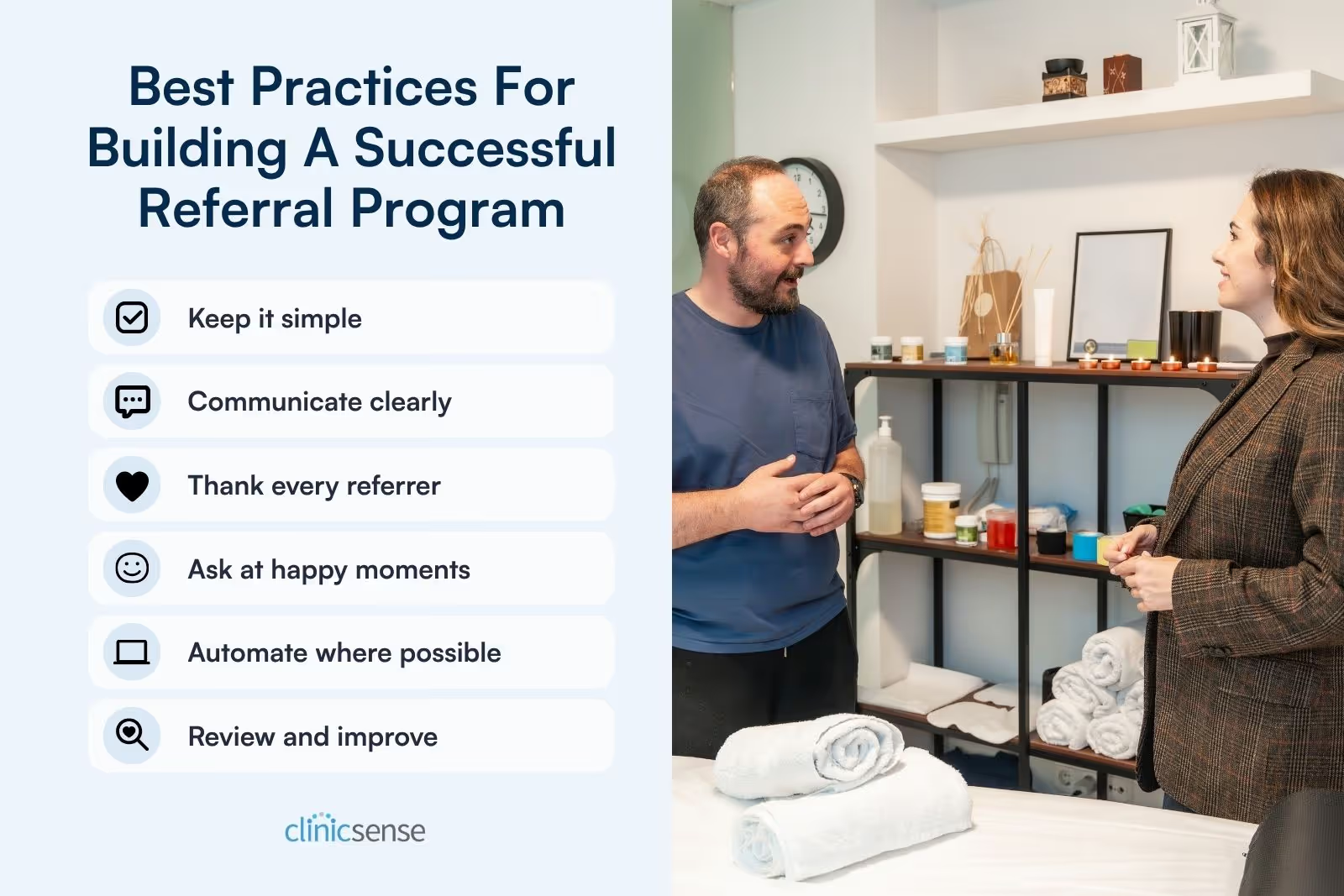
- Keep it simple: If it takes more than a few clicks, participation drops.
- Communicate clearly: Clients need to understand what they get and how.
- Thank every referrer: Even if the referral doesn't convert, acknowledge the effort.
- Ask at happy moments: Request referrals after positive experiences, not randomly.
- Automate where possible: Use software to send invitations, track referrals, and deliver rewards automatically.
- Review and improve: Check what's working quarterly and adjust incentives or messaging.
Boost Your Bookings With An Automated Referral Marketing Program
A referral program helps you get more bookings with less manual work. The key is automation, letting software handle the repetitive tasks so you can focus on client care.
ClinicSense's Marketing & Communication features include automated referral campaigns that send referral invitations to clients automatically after they reach a booking milestone, track who referred whom without spreadsheets, integrate with online booking so new clients can schedule immediately, and apply promo codes automatically when referrals convert.
You don't need to become a marketing expert. The right tools handle the details quietly in the background. Plus ClinicSense also helps you manage your entire business with online booking, charting, reminders, financial reports and more. Try it free!
.avif)


Frequently Asked Questions
How do I ask clients for referrals without being pushy?

Should I reward referrers even if the new client does not book?
How long does it typically take to see results from a new referral program?

ClinicSense Content Studio develops educational resources for health and wellness professionals who want to run stronger, more sustainable businesses. We focus on clear, trustworthy guidance across marketing, operations, client experience, and practice growth.

.avif)

A better way to run your practice.

Start your 14-day free trial today.
