
Chiropractic Business Tips
Are Chiropractors Doctors? What To Tell Your Patients

Are chiropractors doctors?
If you’ve practiced for more than five minutes, you’ve heard it. It comes up at the front desk. It shows up on intake forms. It gets typed into Google before someone ever books.
Patients aren’t being rude. They’re confused.
In healthcare, the word doctor means different things to different people. For many patients, “doctor” automatically means medical doctor. Hospital care. Prescriptions. Surgery.
So when they see “Dr.” on your website or business card, their brain pauses.
That pause matters.
Uncertainty about credentials creates doubt.
Doubt lowers confidence.
Lower confidence hurts bookings.
This isn’t just a semantics question. It’s a trust question.
When patients understand who you are, what your training means, and how your scope differs from an MD, skepticism drops. Authority rises. Conversations feel easier.
The key is clarity. Clear answers. Simple language. No defensiveness.
Let’s walk through exactly how to explain your credentials in a way that builds trust before the first visit.
TL;DR: Chiropractors are doctors who earn a Doctor of Chiropractic (DC) degree and are regulated healthcare professionals. They are not medical doctors and do not prescribe medication. They assess and treat musculoskeletal conditions within a defined scope of practice. Clear communication about this builds trust and improves bookings.
Are Chiropractors Doctors? The Clear, Accurate Answer
Yes. Chiropractors hold a Doctor of Chiropractic (DC) degree and are licensed, regulated healthcare professionals. They are not medical doctors (MDs), but they are trained and authorized to assess, diagnose, and treat conditions within their defined scope of practice.
That’s the clear, accurate answer.
When patients ask, “Are chiropractors real doctors?” what they’re usually trying to understand is whether your training is legitimate and recognized. The answer is yes. Chiropractors complete doctoral-level education, pass national board exams, and maintain licensure through ongoing continuing education.
When they ask, “Are chiropractors medical doctors?” the answer is no. Chiropractors do not attend medical school, and they do not earn an MD degree. Their education, scope, and treatment approach are different.
If you want a concise, front-desk-friendly explanation, use this:
Chiropractors earn a Doctor of Chiropractic degree and are regulated healthcare professionals. We are not medical doctors, but we are trained and licensed to assess, diagnose, and treat conditions within our scope of practice.
Simple. Direct. Confident.
Both professions use the title “doctor” because both complete doctoral-level education.
They simply practice in different lanes of healthcare.
When you explain it that way, the question “are chiropractors doctors?” becomes an opportunity to build clarity instead of defending your credibility.

Why Chiropractors Are Called “Doctors”
Chiropractors are called doctors because they earn a Doctor of Chiropractic (DC) degree, which is a doctoral-level professional credential. In Canada, chiropractors are regulated health professionals and are legally permitted to use the title “Doctor” within their scope of practice.
That’s the straightforward explanation.
When patients ask why chiropractors call themselves doctors, they are usually trying to understand whether the title is honorary or earned. It’s earned.
The word doctor simply means someone who has completed doctoral-level education in a recognized field. Medical doctors hold an MD. Dentists hold a DDS or DMD. Optometrists hold an OD. Chiropractors hold a DC.
Historically, the chiropractic profession established doctoral-level education standards early on, and provincial regulation formalized the use of the title. Today, the title is protected and regulated. It is not casual branding. It reflects formal education, licensing, and accountability.
Where things get murky is not legality. It’s an assumption.
Many patients hear “doctor” and automatically think “medical doctor.” That’s why transparency matters. When you proactively clarify your degree and scope, you reduce confusion before it turns into skepticism.
Front desk one-sentence explanation:
“Chiropractors earn a Doctor of Chiropractic degree and are licensed healthcare providers, so the title Doctor reflects their training.”
Do Chiropractors Go to Medical School? Education Explained
No. Chiropractors do not attend medical school. They complete a Doctor of Chiropractic (DC) program at an accredited chiropractic college, followed by national board exams and provincial licensing.
When patients ask this, they’re usually comparing you to an MD. When prospective chiropractors ask it, they’re evaluating the career path.
Here’s what the education pathway actually looks like:
Typical Chiropractic Education Path
- Undergraduate prerequisites
- Most programs require at least three years of university-level study before admission.
- Four-year Doctor of Chiropractic program
- Intensive training in anatomy, neurology, biomechanics, diagnosis, radiology, and clinical sciences.
- Supervised clinical training
- Thousands of hours treating real patients under faculty supervision.
- National board examinations (CCEB in Canada)
- Written and clinical competency exams.
- Provincial registration and continuing education
- Ongoing requirements to maintain licensure.
So, how long do chiropractors go to school?
Typically seven to eight years of post-secondary education before independent practice.
Medical doctors complete medical school and residency. Chiropractors complete chiropractic college and licensing exams. The routes are different, but both are structured, regulated, and demanding.
When you explain that clearly, the comparison stops feeling competitive and starts feeling factual.
What Chiropractors Can Do (And What They Can’t)
What do chiropractors treat and what are they allowed to do?
Chiropractors are regulated healthcare professionals who assess, diagnose, and treat musculoskeletal conditions, particularly those involving the spine, joints, and nervous system. In Canada, chiropractors cannot prescribe medication. Authority to order imaging depends on provincial regulations.
This is one of the most important conversations to handle clearly. When patients search “can chiropractors prescribe medication in Canada” or “can chiropractors write prescriptions,” they’re trying to understand scope.
Prescribing Medication
Chiropractors do not prescribe medication. Writing prescriptions is outside the chiropractic scope of practice.
A simple way to explain it: chiropractic care focuses on conservative, non-pharmacological treatment approaches.
Being direct about this builds credibility.
Ordering Imaging
Imaging authority varies by province.
In Ontario, chiropractors can order X-rays when clinically indicated. Access to advanced imaging, such as MRI, has been subject to regulatory review and depends on current provincial regulations. When patients ask, “Can chiropractors order MRI in Ontario?” the accurate answer is that imaging privileges are defined by provincial scope and may evolve over time.
What Chiropractors Treat
Chiropractors assess, diagnose, and manage musculoskeletal conditions, including:
- Low back pain
- Neck pain
- Joint dysfunction
- Headaches
- Postural strain
- Sports injuries
- Sciatica
Treatment may include:
- Spinal and joint adjustments
- Soft tissue techniques
- Exercise recommendations
- Movement-based rehabilitation
The simplest explanation is this: chiropractors treat mechanical and movement-related conditions within a defined scope of practice. They do not replace medical doctors, and they do not perform surgery.
When you’re equally clear about what you can do and what you can’t do, patients feel safer. And safer patients book with confidence.
Common Patient Myths Chiropractors Should Be Ready to Address
Patient skepticism rarely comes from hostility. It usually comes from misinformation, outdated narratives, or confusion about scope.
The Canadian Chiropractic Association outlines several common myths about chiropractic treatment that still circulate. Being prepared to address them calmly builds authority.
Here are a few you’re likely to hear.
Myth 1: Chiropractors Aren’t “Real Doctors”
Patients may question whether the title “Doctor” is legitimate.
A clear explanation of the Doctor of Chiropractic degree, regulation, and scope usually resolves the concern quickly.
Myth 2: Chiropractic Adjustments Are Unsafe
Some patients worry about “cracking” or long-term harm.
A grounded response focuses on clinical assessment, informed consent, appropriate patient selection, and the fact that spinal manipulation is included in clinical practice guidelines for certain musculoskeletal conditions, especially low back pain.
Myth 3: Once You Start, You Have to Go Forever
This often stems from misunderstanding treatment planning.
Explain that recommendations are based on clinical findings and patient goals. Ongoing care is optional, not mandatory.
Myth 4: Chiropractic Isn’t Evidence-Based
This myth tends to come from outdated information.
Modern chiropractic education emphasizes diagnosis, red flags, imaging when appropriate, and evidence-informed musculoskeletal care.
Myth 5: Chiropractors Don’t Collaborate With Other Providers
In reality, interdisciplinary collaboration is common. Chiropractors refer out when needed and co-manage patients with physicians, physiotherapists, and other providers.
You don’t need to debate.
You don’t need to overexplain.
Acknowledge the concern. Provide a factual answer. Then move forward confidently.
That posture builds trust faster than defensiveness ever will.
What Chiropractors Treat & What Patients Ask About Most
Patients are often less concerned about credentials and more concerned about results. Their questions tend to be practical.
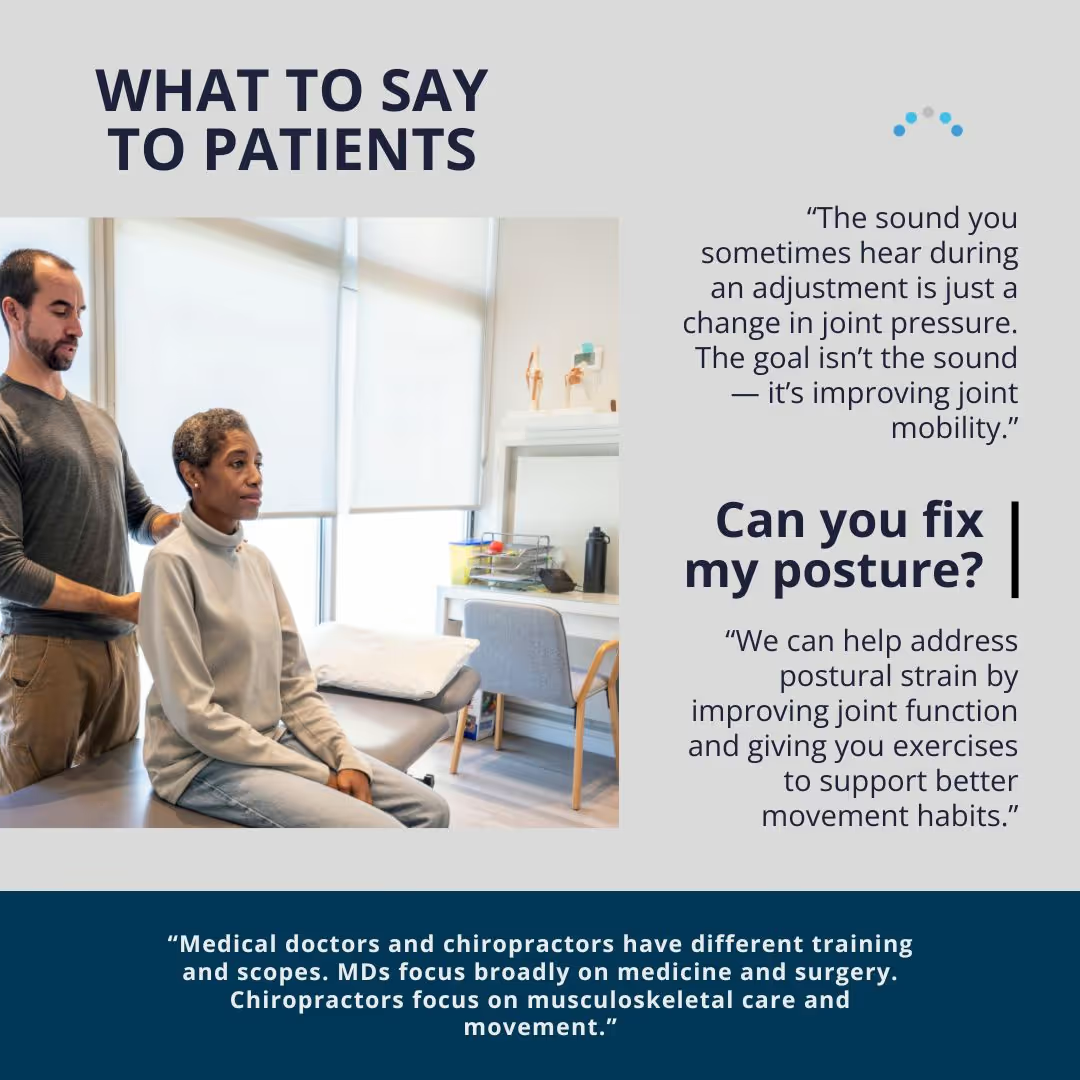
Can chiropractors help with posture?
Yes. Chiropractors assess joint function, muscle balance, and movement patterns. Postural strain is often linked to mechanical stress, work habits, and repetitive loading. Care may include adjustments, soft tissue work, and corrective exercise to improve alignment and movement efficiency.
Can chiropractors help with sciatica?
Sciatica is typically related to nerve irritation or compression in the lower back. Chiropractors evaluate the lumbar spine, hips, and surrounding structures to determine whether conservative musculoskeletal care is appropriate. Treatment plans may include spinal adjustments, mobility work, and guided exercises.
Patients also ask:
How do chiropractors know where to adjust?
It’s not guesswork. Chiropractors perform a clinical assessment that may include health history, orthopedic and neurological testing, range of motion analysis, palpation, and, when indicated, imaging. Adjustments are based on findings, not routine.
Why do chiropractors crack your back?
The “cracking” sound is simply gas releasing from a joint as pressure changes. The goal is not the sound. The goal is restoring joint mobility and improving function.
Do I have to keep going back for chiropractic care to work?
Treatment planning is individualized. Recommendations are based on diagnosis, patient goals, and response to care.
When you explain the process clearly, the experience feels less mysterious and more clinical. And clarity reduces hesitation before the first appointment.
How Clinics Should Answer These Questions Confidently
Clear answers should not depend on who answers the phone.
If patients are asking, “Are chiropractors doctors?” or “Can chiropractors prescribe medication?” your clinic needs standardized, confident responses at every touchpoint.
Think of patient education as part of your clinical infrastructure.
Here’s a practical checklist:
- Train front-desk staff
- Provide short, consistent explanations for common scope and education questions. Practice them until they sound natural.
- Standardize your messaging internally
- Create a shared document that outlines how your clinic explains credentials, imaging, and treatment planning.
- Use your website intentionally
- A strong FAQ page answers patient questions before they call. That reduces friction and improves booking conversions.
- Automate pre-visit education
- With chiropractic scheduling software, you can send confirmation emails that explain what to expect, clarify scope, and reduce first-visit anxiety.
- Align documentation with communication
- Your chiropractic soap notes software should reflect clear assessments and clinical reasoning. Professional documentation reinforces professional messaging.
- Choose systems that support clarity
- The right software for chiropractors and other chiropractic tools help you deliver consistent communication without adding administrative burden.
If you’re starting a chiropractic practice, build this structure from day one. Communication systems are not an afterthought. They’re part of your brand.
Patients don’t need longer explanations. They need clearer ones.
And clarity, delivered consistently, builds trust faster than persuasion ever will.
Clarity Builds Trust
Patients don’t need a lecture about chiropractic.
They need confidence in it.
When your clinic communicates clearly about education, scope, and treatment approach, three things happen:
- Fewer hesitant first visits
- Fewer skeptical questions at the front desk
- More referrals from patients who understand what you actually do
Clarity reduces friction. Friction reduction increases bookings.
Over time, that affects growth.
For clinic owners and associates thinking about long-term sustainability, communication is not just clinical. It’s strategic. The question “how much do chiropractors make” is often framed as a salary discussion. In reality, income is tied to positioning, retention, referrals, and reputation.
Patients who understand your role are more likely to:
- Commit to care plans
- Refer friends and family
- Stay engaged in maintenance or supportive care
That consistency builds predictable revenue.
Whether you’re refining systems in an established clinic or starting a chiropractic practice, professional clarity is part of your brand. It shapes marketing, team training, and patient experience.
Modern chiropractic care is not just about adjustments.
It’s about communication.
And when your clinic speaks clearly and confidently, trust compounds. So do results.

.avif)


Frequently Asked Questions
Are chiropractors doctors?

Are chiropractors medical doctors?
Do chiropractors go to medical school?
Can chiropractors prescribe medication in Canada?
What do chiropractors treat?

ClinicSense Content Studio develops educational resources for health and wellness professionals who want to run stronger, more sustainable businesses. We focus on clear, trustworthy guidance across marketing, operations, client experience, and practice growth.


A better way to run your practice.

Start your 14-day free trial today.
