
Marketing
Direct Mail Marketing For Healthcare Clinics

You already know that most of your best clients live within a few miles of your clinic. They drive past your door every day. But here is the problem: they do not know you exist yet.
Digital ads can help, but inboxes are crowded. Social media posts disappear in hours. Meanwhile, a well-designed postcard lands directly in someone's hands and stays on the kitchen counter for days. That is why snail mail remains one of the most reliable ways to reach nearby residents who need exactly the kind of care you provide.
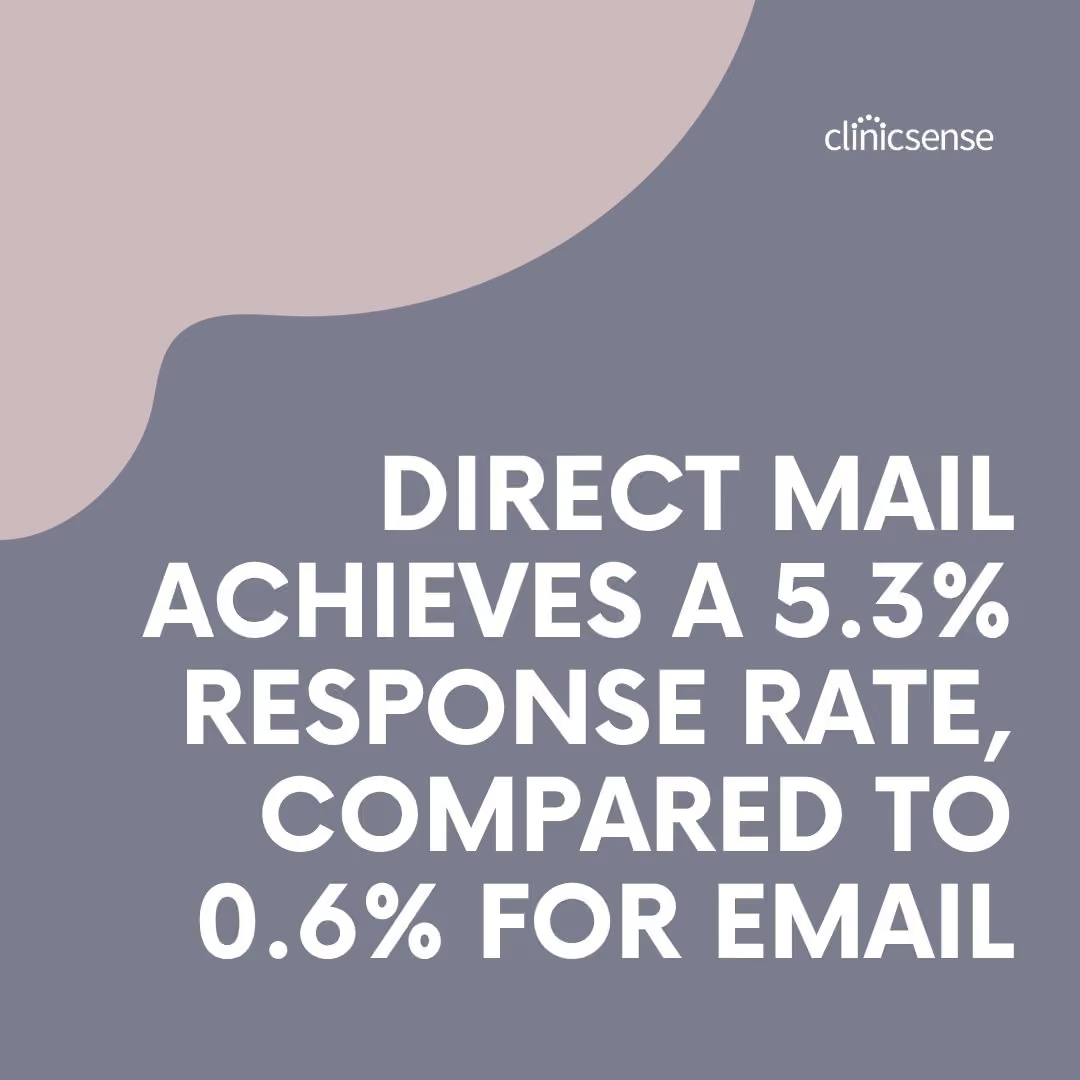
According to the Data & Marketing Association, direct mail achieves a 5.3% response rate for house lists, compared to 0.6% for email.
Direct mail does not require a marketing degree or a huge budget. In this guide, you will walk through a complete postcard campaign from start to finish.
In this article, you will learn:
- Why direct mail postcards still work for health and wellness clinics
- How to plan a targeted postcard campaign on a small budget
- Step-by-step instructions for designing a card that gets noticed
- How to track your results and know if the campaign paid off
- Common mistakes that waste money and how to avoid them
TL;DR: Direct mail postcards are one of the most cost-effective ways for healthcare clinics to attract nearby clients. Target households within a 3- to 5-mile radius using USPS EDDM, time your mailing during slow seasons, include a specific time-limited offer, invest in quality design on thick card stock, and track every response with promo codes or intake form questions to measure your return.
Running a direct mail campaign takes time, and so does following up with new clients after they respond. The right practice management tools can handle the scheduling, reminders, and follow-ups so you can focus on the work you love. Once someone responds to your postcard, having the right communication features in place — like automated appointment reminders — helps you turn that first visit into a long-term client.
Let's get into it.
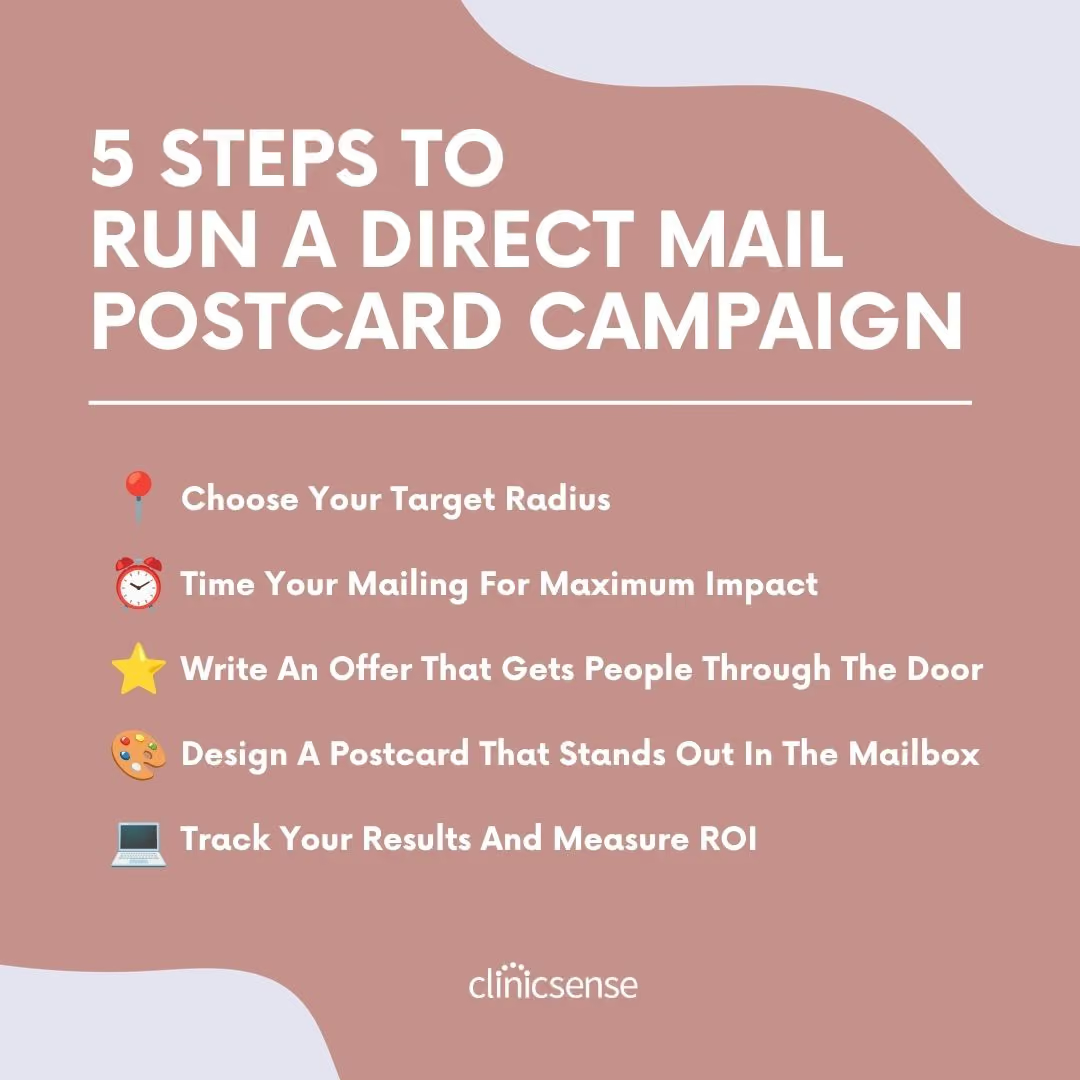
How To Run A Direct Mail Postcard Campaign In 5 Steps
This framework gives you a clear path from planning to tracking. Follow each step in order and you will have a campaign ready to send within a week or two.
Step 1: Choose Your Target Radius
Start with the area closest to your clinic. Most health and wellness clients prefer a provider within a 10- to 15-minute drive. That means your best return will come from mailing postcards to households within a 3- to 5-mile radius of your location.
Here is how to figure out your mailing list:
- Use the USPS Every Door Direct Mail (EDDM) tool. Go to the USPS EDDM website and enter your clinic address. It will show you every mail carrier route in your area, along with the number of households on each route.
- Select 2 to 4 carrier routes to start. Each route typically covers 400 to 800 households. A smaller test lets you measure results before spending more.
- Budget roughly $0.50 to $0.75 per household. This covers printing and postage through EDDM. For a test run of 1,500 households, expect to spend between $750 and $1,125 total.
A real-world example: Say you are a massage therapist in a mid-size town. You pick three carrier routes covering 1,200 homes within a 4-mile radius. At $0.65 per piece, your total cost is $780. If just 1% of recipients book a first appointment at $80, that is 12 new clients and $960 in immediate revenue, plus the lifetime value of each client who returns.
Step 2: Time Your Mailing For Maximum Impact
Send postcards when people are most likely to book. Timing can make or break your response rate. Here are three smart timing strategies:
- Mail during your slow season. If January and February are quiet months, send postcards in late December or early January. You fill empty appointment slots instead of turning away people during your busiest weeks.
- Align with seasonal needs. A chiropractor might mail in early spring when people start yard work and outdoor activities. An acupuncturist could time a mailing around allergy season. Think about when your ideal client is most likely to feel the problem you solve.
- Avoid holiday mail clutter. The week before major holidays (Thanksgiving, Christmas) brings a flood of catalogs and cards. Your postcard is more likely to get noticed during quieter mail weeks.
Plan for a 2- to 3-week lead time. Most print shops need 5 to 7 business days for production, and EDDM mailings can take another 7 to 14 days to reach mailboxes. Work backward from your target delivery date.
Step 3: Write An Offer That Gets People Through The Door
A postcard without a clear offer is just a pretty piece of paper. You need to give recipients a specific reason to act now.
The best offers for healthcare clinics are simple and low-risk:
- Dollar-off first visit: "$20 Off Your First Massage" is clear and easy to understand. It lowers the barrier for someone who has never visited your clinic.
- Free add-on service: "Book a 60-Minute Session and Get a Free Hot Stone Upgrade" adds value without discounting your core service.
- Free consultation or screening: "Free 15-Minute Posture Assessment — No Appointment Needed" works well for chiropractors and physios because it gets people in the door with zero commitment.
Three rules for your offer:
- Make it specific. "$10 Off" works better than "Special Discount Inside." People want to know exactly what they are getting.
- Set an expiration date. "Valid through August 31" creates urgency. Without a deadline, your postcard goes into the "I'll do it later" pile, which really means the recycling bin.
- Keep it simple to redeem. "Mention this postcard when you call" or "Use code WELCOME20 online" is all you need. Do not make people fill out forms or jump through hoops.
When new clients book through your postcard offer, automated intake forms save you time at the front desk and make a strong first impression.
When you offer something valuable to a first-time client, you are not cutting into your profits. You are investing in a relationship that could be worth hundreds or thousands of dollars over time.
Step 4: Design A Postcard That Stands Out In The Mailbox
Your postcard has about 3 seconds to grab attention before it gets tossed. Design matters more than you might think.
Size and shape:
- Go bigger than the minimum. The standard postcard size is 4" x 6", but a 6" x 9" or 6" x 11" card stands out in a stack of standard mail. The extra printing cost is usually just a few cents per piece.
- Try an unusual shape. Some print shops offer die-cut postcards with rounded corners or custom shapes. These feel different in the hand and get a second look.
Paper quality:
- Use at least 14-point card stock. Thin, flimsy cards feel cheap and get thrown away faster. A thick, sturdy card feels professional and is more likely to stay on the counter.
- Add a coating. AQ (aqueous) or UV coating gives the card a glossy, polished finish that protects the ink and makes colors pop. The cost is minimal, usually $10 to $20 extra per 1,000 cards.
Visual design tips:
- Use one high-quality photo that shows your clinic or a real treatment in action. Stock photos of smiling models feel generic. A photo of your actual treatment room or your hands at work builds trust.
- Print in full color on both sides. The front should be your attention-grabber: a bold headline, a striking image, and your offer. The back is for details: your address, phone number, website, hours, and a map or directions.
- Leave white space. Do not cram every inch with text. A clean, uncluttered layout is easier to read and looks more professional.
- Make the offer impossible to miss. Put it in a large, contrasting color block. If someone glances at your card for 2 seconds, the offer should be the one thing they remember.
Step 5: Track Your Results And Measure ROI
You cannot improve what you do not measure. Tracking tells you whether your campaign made money and what to change next time.
Four ways to track postcard responses:
- Use a unique promo code. Give the postcard its own code (like MAIL2026) that is not used anywhere else. Every redemption came from the mailing.
- Ask new clients how they heard about you. Add "How did you find us?" to your intake form. It takes five seconds and gives you data on every new booking.
- Use a dedicated phone number or landing page. A tracking phone number (available from services like CallRail for about $30/month) or a unique URL (like clinicsense.com/welcome) lets you count responses precisely.
- Track the offer expiration window. Count all redemptions between the mailing date and the offer expiration. Compare that number to your usual new-client rate for the same period.
Tracking which new clients came from your mailing is easier when your booking system logs how each client found you. Make it easy for postcard recipients to schedule by offering online booking directly from your website — it removes friction and lets people book at midnight if that is when they finally look you up.
How to calculate your return:
Here is a simple formula to see if your campaign paid off:
- Total campaign cost: Printing + postage + design. For 1,500 postcards, this might be $900 to $1,200.
- Revenue from new clients: Number of new bookings multiplied by your average session price.
- Lifetime value factor: The average new client visits 5 to 10 times in the first year. So a $20 discount on a first visit that leads to $800 in annual revenue is a strong return.
Example: You spend $1,000 on 1,500 postcards. You get 15 new clients (1% response rate) who each pay $90 for a first visit. That is $1,350 in immediate revenue. If each client returns 6 times in the next year, that is $8,100 in total revenue from a $1,000 investment.
What Makes Direct Mail Different From Digital Marketing?
You might wonder why you should bother with postcards when you can run Facebook ads for less money. The answer comes down to three things: tangibility, trust, and targeting.
A postcard is a physical object. It sits on a counter, gets pinned to a fridge, or gets handed to a spouse with "Hey, we should try this place." Digital ads disappear the moment someone scrolls past them.
Direct mail also carries more trust. People are used to ignoring banner ads and skipping sponsored posts. But a well-designed postcard from a local business feels personal, especially when it arrives in a neighborhood mailbox rather than a crowded inbox.
Finally, direct mail lets you target by geography with precision. You are not paying to reach people 50 miles away who will never visit your clinic. Every dollar goes to households within driving distance.
That said, direct mail works best as part of a broader strategy. Combine it with other marketing techniques like online reviews, social media, and referral programs. A postcard gets someone's attention. Your online presence and client experience turn that attention into a lasting relationship.
How Much Does A Direct Mail Campaign Actually Cost?
Let's break down a real budget so you know exactly what to expect.
For a typical 1,500-piece EDDM postcard campaign:
ItemCost RangeGraphic design (freelancer or template)$50 – $200Printing (6" x 9", 14pt, full color, coated)$250 – $400EDDM postage ($0.23/piece for standard)$345Total: $645 – $945
Ways to keep costs down:
- Design it yourself. Tools like Canva have free postcard templates. You can create a professional-looking card in an hour.
- Start with a small test. Mail 500 to 1,000 pieces first. If the response rate is strong, scale up.
- Negotiate with local print shops. Many offer discounts for repeat orders or will match online pricing if you ask.
Budget tip: Set aside 3% to 5% of your monthly revenue for marketing. If your clinic brings in $8,000 a month, that is $240 to $400, which is enough for a small direct mail test every quarter.
What Are Common Direct Mail Mistakes That Waste Money?
Even a good postcard campaign can fall flat if you make one of these common errors. Here is what to watch out for:
What Happens When You Skip The Offer?
Sending a postcard with no clear offer is the most common mistake. A card that just says "Now Open!" or "Visit Us Today!" gives the recipient no reason to act right now. Always include a specific, time-limited offer that makes someone pick up the phone or go to your website.
What If You Mail To The Wrong Area?
Targeting too wide an area wastes money. If you mail to 10,000 households across an entire city, most of those people will never drive 30 minutes to see you. Stay focused on a tight radius. It is better to mail to 1,000 nearby homes twice than to 5,000 distant homes once.
Why Do Some Postcards Get Thrown Away Immediately?
Cheap materials and cluttered design kill response rates. A thin, flimsy card with tiny text and five competing messages looks like junk mail. Invest in thick card stock, a clean layout, one strong image, and one clear offer. Quality signals that your clinic is professional and trustworthy.
Should You Send Postcards Just Once?
One mailing is rarely enough. Marketing research consistently shows that people need to see a message 5 to 7 times before they take action. Plan to mail to the same routes at least 2 to 3 times over a few months. Repetition builds familiarity, and familiarity builds trust.
After your postcard brings in a new client, protect that revenue by sending appointment reminders so they actually show up for their first visit.
What Happens When You Forget To Track Results?
Without tracking, you are guessing. You will not know whether the campaign worked, which routes performed best, or whether to invest more next time. Use at least one tracking method (promo code, dedicated phone number, or intake form question) so you can make data-driven decisions about your next mailing.
How ClinicSense Helps You Manage New Clients From Direct Mail
A successful postcard campaign brings new people through your door. But turning those first visits into lasting client relationships takes follow-through — and that is where the right practice management software makes a real difference.
Here is how ClinicSense supports the entire process, from first contact to repeat booking:
- Online booking: Let postcard recipients schedule their first appointment directly from your website, any time of day. No phone tag, no waiting for office hours.
- Automated appointment reminders: Reduce no-shows by sending text and email reminders before each visit. New clients who actually show up are the ones who become regulars.
- Intake forms sent automatically: New clients receive your intake forms by email before their first visit. They arrive ready to go, and you save time at the front desk.
- SOAP notes and charting: Document each session quickly with customizable templates. Spend less time on paperwork and more time with clients.
- Client communication tools: Send follow-up messages, birthday greetings, and re-booking reminders that keep your clinic top of mind between visits.
- Financial reporting: Track revenue by source so you can see exactly how much your direct mail campaign earned over time.
You do not need to overhaul your entire workflow. ClinicSense is designed to fit into the way you already work — just with less manual effort and fewer things falling through the cracks.
Ready to see how it works? Start your free 14-day trial — all features included, no credit card required. Get started.

.avif)


Frequently Asked Questions
How many postcards should I send for my first direct mail campaign?

What is EDDM and how does it work for healthcare clinics?
How often should I send direct mail to get results?
Should I use direct mail or digital ads to grow my clinic?
What response rate should I expect from a postcard campaign?
Do I need a graphic designer to create my postcards?

ClinicSense Content Studio develops educational resources for health and wellness professionals who want to run stronger, more sustainable businesses. We focus on clear, trustworthy guidance across marketing, operations, client experience, and practice growth.

A better way to run your practice.

Start your 14-day free trial today.
