
How To Guides
How To Go From Solo Practitioner To Clinic Owner

You have built a steady solo practice, and your schedule stays full. Now you are wondering whether it is time to become a clinic owner. Don't worry, wanting more is a good sign, not a red flag.
Growing from a one-person practice into a multi-practitioner clinic is a big shift. It changes how you spend your day, how you earn, and how you see yourself. But it is a well-worn path, and you can take it one step at a time.
This guide walks you through the whole journey in plain language. You will learn how to know you are ready and what it costs. You will also learn how to set up your business, hire, and build systems that run without you.
Let's start with what the change really means.
TL;DR: Becoming a clinic owner means shifting from treating every client yourself to leading a multi-practitioner practice built on staff, systems, and a shared brand. Confirm you are consistently booked and financially stable. Then plan your startup costs, register a business entity, hire carefully, document your workflows, and track a few key numbers.
What Does It Mean To Become A Clinic Owner?
Becoming a clinic owner means you stop doing all the treatment yourself. Instead, you build and lead a multi-practitioner practice with staff, systems, and a brand that is bigger than you.
Let's define two terms first. A clinic owner is the person who owns and runs the business, whether or not they still treat clients. A multi-practitioner clinic simply means a practice where more than one provider works under one roof and one brand. They could be multi-disciplinary, but not necessarily.
This is a growing, well-worn path for massage and allied-health pros. Employment of massage therapists is projected to grow 15 percent from 2025 to 2035, much faster than the average for all occupations, per the BLS massage therapist outlook.
Want the full deep-dive? Our guide on how to build a multi-practitioner clinic covers each stage in detail.
How Do You Know You're Ready To Grow?
Simply put, you are ready to grow when your solo practice is full, stable, and profitable. Growing to fix a slow schedule rarely works. Growth works best when you build from strength.
Client demand supports the move, too. According to an AMTA consumer massage survey, 86% of consumers agree that massage therapy should be considered a form of health care.
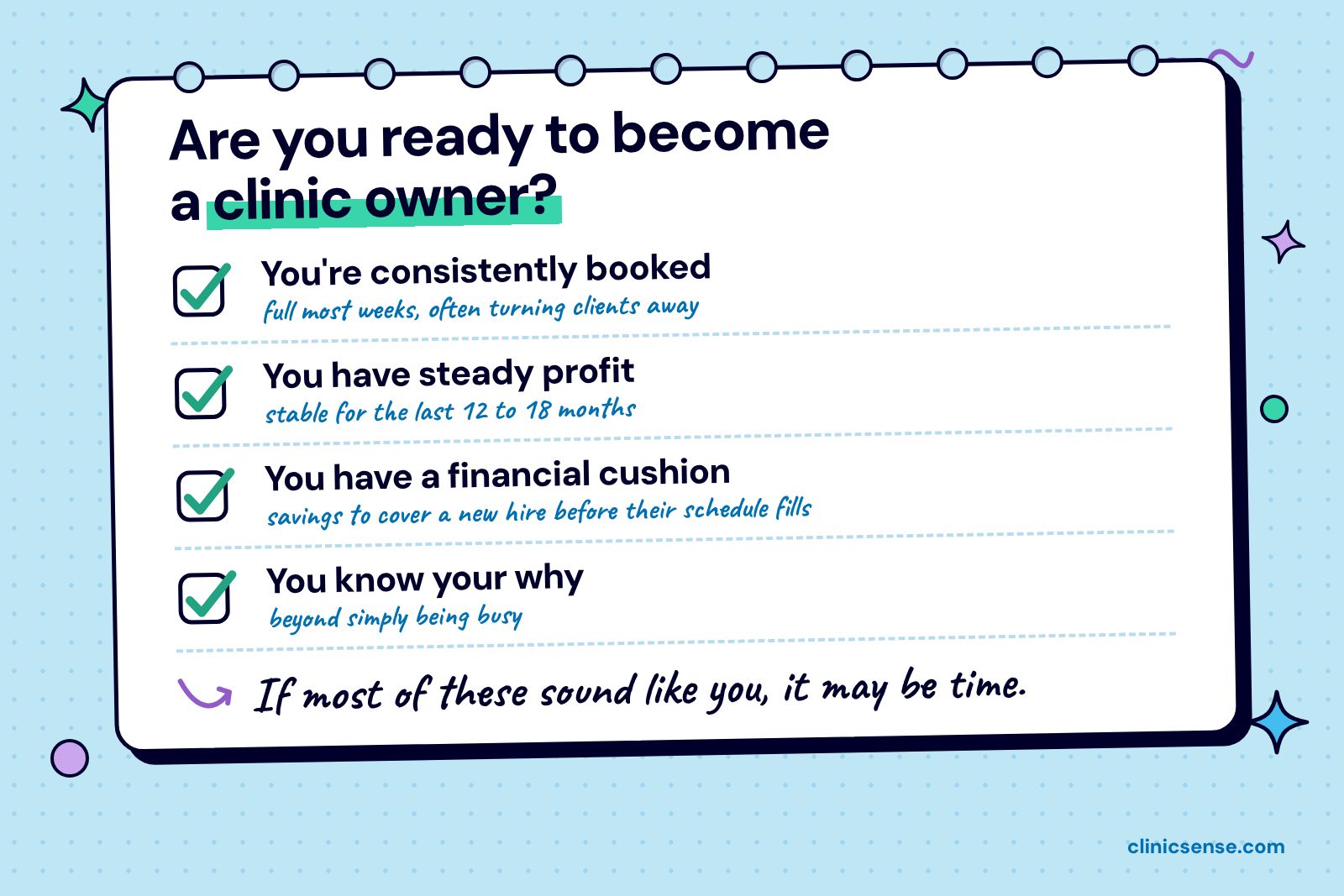
Here is a quick "Are You Ready?" check. If most of these sound like you, it may be time:
- You're consistently booked: You are full most weeks and often turning clients away.
- You have steady profit: You have earned stable profit over the last 12 to 18 months.
- You've built a financial cushion for your clinic: You have savings to cover a new hire before they fill their schedule.
- You have a clear why: You know why you want to grow, beyond simply being busy. Maybe it's to fulfill a dream; maybe it's because you want to rent a larger space, and this is the best path forward. Whatever it is, know your why.
How Much Does It Cost To Open A Clinic?
Costs vary widely, so let's focus on the buckets, not exact numbers. Your total depends on your space, your team size, and your city.
Most first-time owners lease their space rather than buy it. Leasing keeps your upfront cost lower and gives you room to grow.
One warning: don't undercapitalize. Undercapitalizing means starting without enough cash to cover early bills. Aim for several months of operating expenses in reserve.
What Business And Legal Structure Do You Need?
As a solo practitioner, you may run as a sole proprietor. That simply means you and the business are one and the same for taxes.
Once you add staff, most owners register a formal entity. Common choices are registering as an LLC or a professional corporation, which help protect your personal assets.
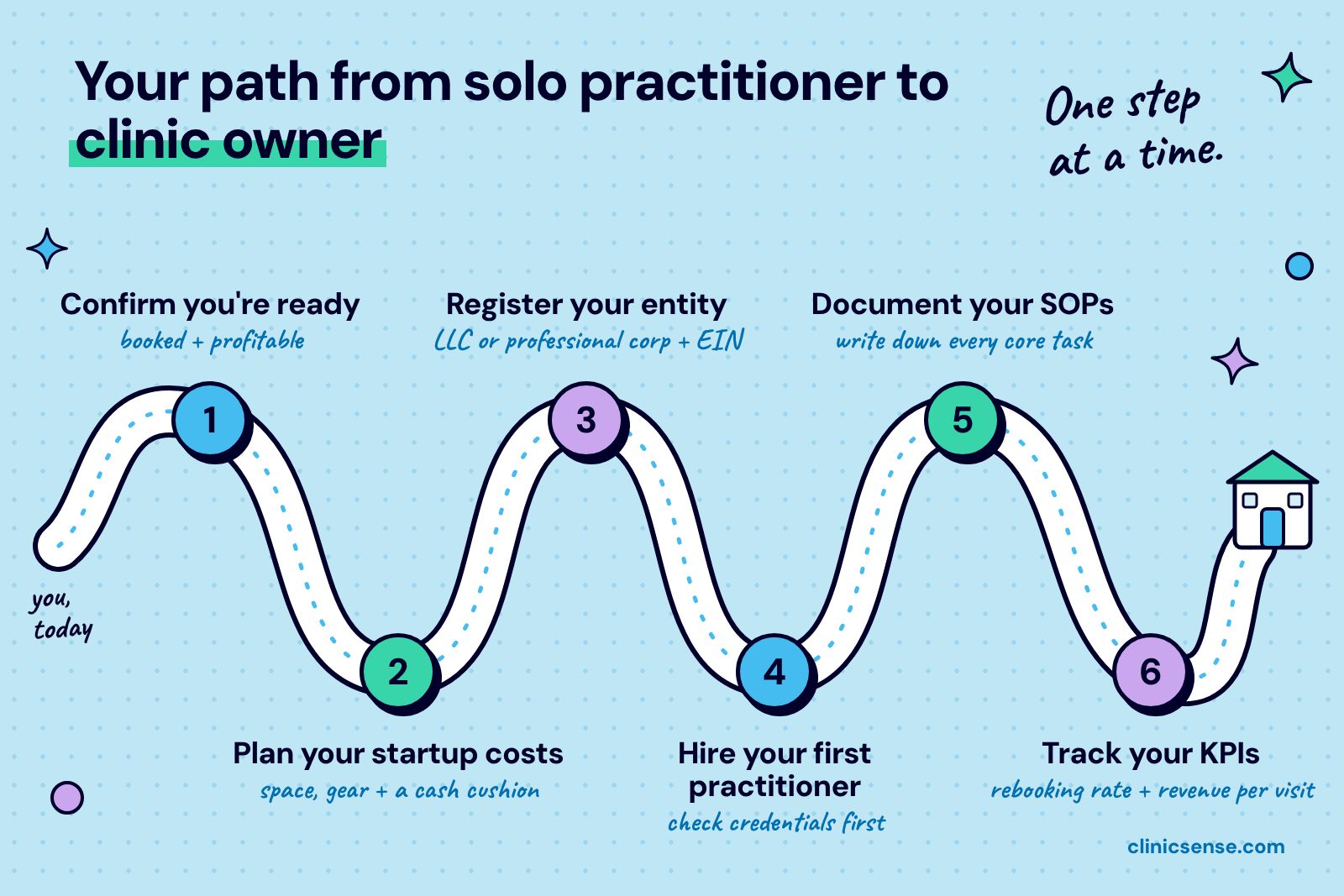
Here are the usual steps as you formalize your business:
- Register your entity, an LLC or professional corporation, in your state or province.
- Get an EIN, the tax ID number the government uses to identify your business.
- Update your license and insurance to cover your associates.
- Talk to an attorney and accountant who know your local rules.
Don't worry about the complex rules you may have read about for physician practices. Requirements vary by state and province, so ask your attorney and accountant which structure fits your clinic.
How Do You Hire And Onboard Your First Practitioner?
Hiring is the moment your practice becomes a real team. It can feel scary, but you are in very good company. Small businesses contributed a net increase of 2.6 million jobs, or 80.0 percent of that total of net new U.S. jobs from March 2022 to March 2023, per the SBA small business jobs data.
When should you hire? A good sign is that you are turning away clients and can cover the new hire's pay before their schedule fills.
Next, decide how you will bring them on: will you hire your therapists as employees or contractors?
- Employee: You set their hours and methods, and you handle payroll and taxes.
- Contractor: They work more independently and manage their own taxes.
Where do you find good people? Try these sources:
- Massage and allied-health schools
- Professional associations and job boards
- Referrals from practitioners you trust
- Local community and social media groups
Always check licenses, credentials, and references before you make an offer. Then onboard with clear, written expectations so the first weeks go smoothly.
As your team grows, you control who sees what. ClinicSense's customizable staff permission settings let you decide which staff can access sensitive client information.
For a deeper walkthrough, see our guide on hiring your first practitioner. Not sure how to pay a new hire? Compare common practitioner pay structures before you make an offer.
How Do You Build Systems That Run Without You?
Once someone else joins, you need documented workflows. These are called standard operating procedures, or SOPs. Simply put, an SOP is a written recipe for how a task gets done.
Write down the steps for each core task:
- Online booking and scheduling
- Intake and client forms
- Appointment reminders
- Treatment notes and documentation
- Payments and invoicing
- End-of-day close-out
An all-in-one platform makes these systems consistent for the whole team. ClinicSense handles scheduling, online booking, automatic reminders, and customizable SOAP note templates in one place, with centralized records.
Using one clinic management software also cuts the tool sprawl that slows a growing team.
How Do You Get Paid And Track The Numbers?
As an owner, you get paid in two ways: money you take home and money you reinvest. Early on, expect to reinvest more so the clinic can grow.
You also track a few key numbers, called KPIs, or key performance indicators. Watch these weekly:
- New clients per practitioner: You count first-time clients for each provider.
- Rebooking rate: You track the share of clients who book again.
- Revenue per visit: You measure the average income per appointment.
- Overhead: You watch fixed costs like rent and software.
Per-practitioner reporting shows what is working and who may need support. ClinicSense financial reporting tools turn your daily activity into clear numbers, no spreadsheets required.
How Do You Market A Clinic Instead Of Yourself?
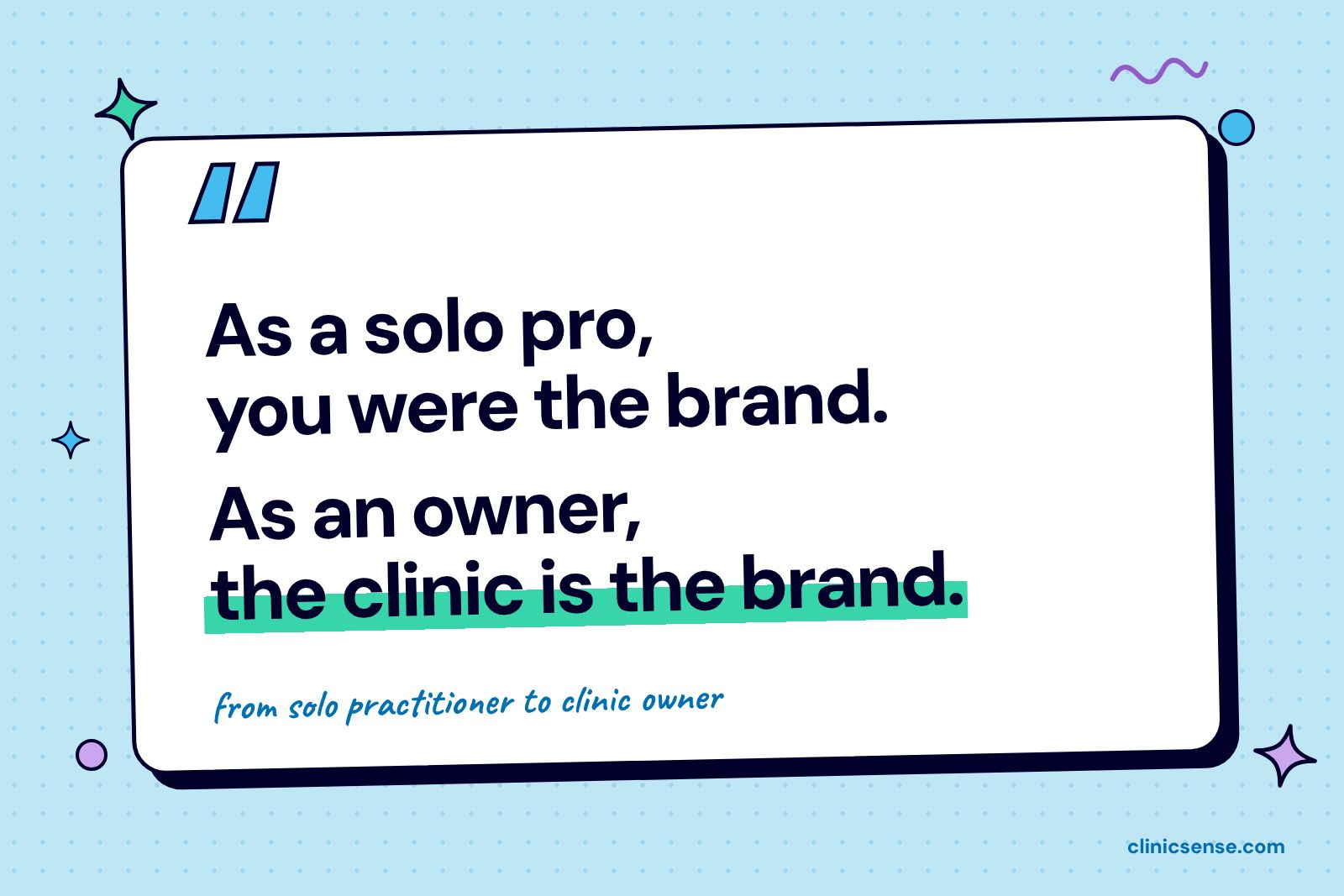
As a solo pro, you were the brand. As an owner, the clinic is the brand, and every practitioner shares it.
Start with a few simple moves:
- Update your Google Business Profile with your clinic name and full team.
- Feature every practitioner on your website, not just you.
- Build referral relationships with nearby health providers.
Referrals matter more than most owners realize. According to the AMTA massage profession fact sheet, the majority of massage therapists receive referrals from other massage therapists (74%), and other top referral sources are other healthcare professionals (64%) and chiropractic offices (60%).
ClinicSense built-in marketing keeps every schedule full. It includes Google Reviews, email newsletters, client referrals, and wellness check-ins that remind past clients to return.
How Do You Shift From Clinician To Owner?
This may be the hardest change of all. You spend less time treating and more time leading. Let's slow down, because you do not have to flip a switch overnight.
Take the shift in steps:
- Block time on your calendar for owner tasks each week.
- Reduce your personal treatment hours slowly, not all at once.
- Find a mentor or peer group who have grown a clinic.
This is as much an identity change as a business one. Our guide on the owner mindset shift helps you work through the self-doubt. You can do this.
What Are The Most Common Mistakes To Avoid?
Let's learn from the owners who went before you. These are the slip-ups that trip people up most:
- Undercapitalizing: You start without enough cash for slow early months.
- Hiring too fast: You bring on the wrong fit before you can pay them.
- Skipping SOPs: You leave workflows undocumented, so nothing runs without you.
- Keeping it all in your head: You never share knowledge with your team.
- Ignoring the numbers: You miss your KPIs until small problems grow large.
Ready To Grow Your Practice?
Going from solo practitioner to clinic owner is a step-by-step journey, and you do not have to do it all at once. The right all-in-one system makes each stage manageable.
Trusted by more than 8,500 practitioners for over 13 years, ClinicSense keeps your scheduling, notes, payments, marketing, and reporting in one place. It is 100% HIPAA and PIPEDA compliant, so your growing team keeps client data safe.
Get started with ClinicSense today. You can do this.

.avif)


Frequently Asked Questions
How much money do I need to open a clinic?

How do I know when I'm ready to hire my first practitioner?
How long does it take to hire and onboard a new practitioner?
Can I own a clinic without being the one treating clients?

Beth is a freelance writer, wellness advocate and neuromuscular therapist. She has been writing content for ClinicSense for 7 years, and before that, worked as a massage therapist for over 17 years. Beth takes a data-driven yet human approach to her work.
Relevant articles


A better way to run your practice.

Start your 14-day free trial today.
