
Industry Insights
Top Massage Modalities In 2026: 15 Most Requested By Clients
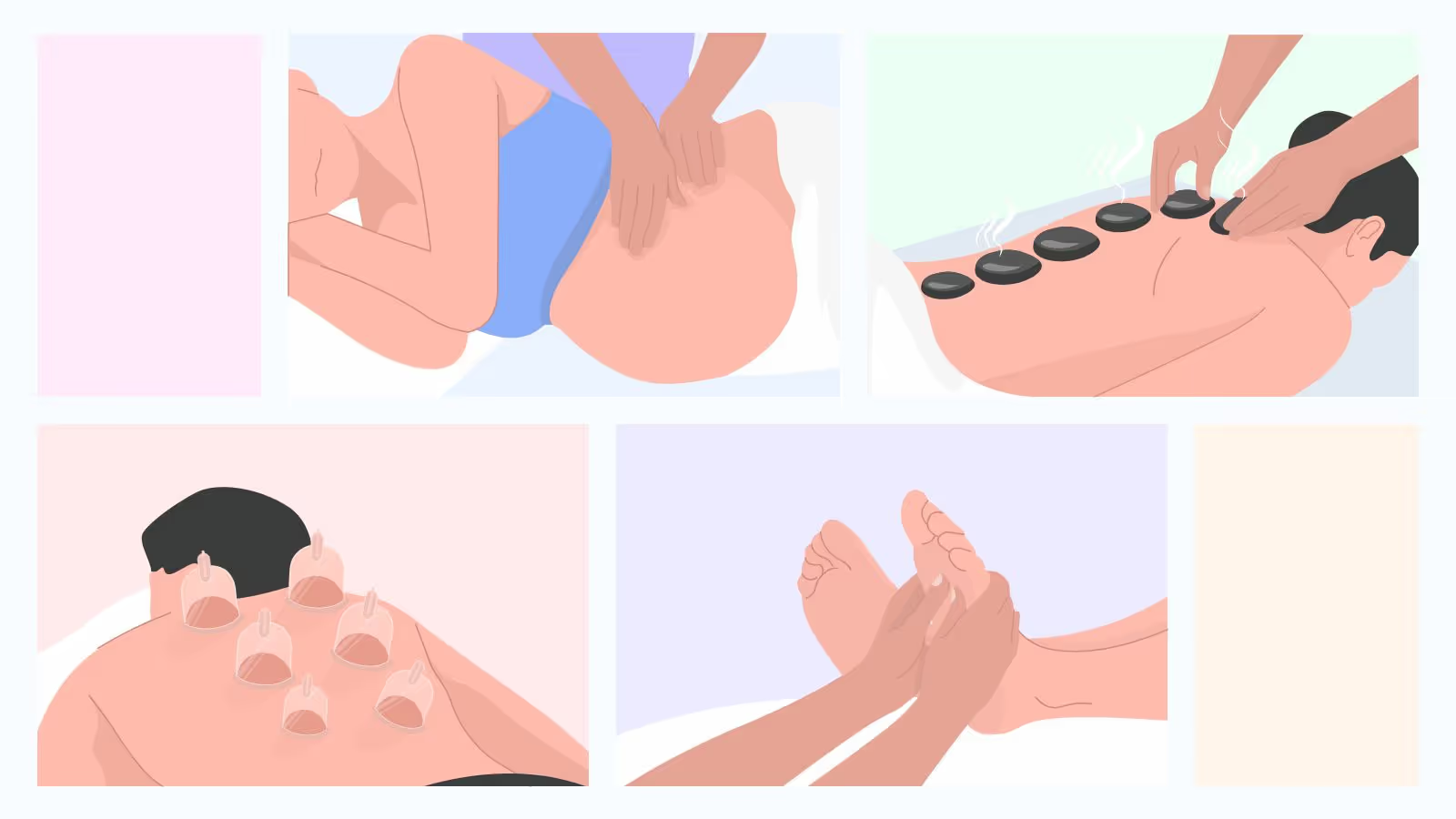
Massage therapy includes many different techniques, often called massage modalities. A modality is simply a specific style or approach to hands-on work, each with its own focus and outcomes.
With so many types of massage therapy available, it’s easy to wonder which ones really matter for your practice.
Here’s the reality:
- Clients don’t always know what to ask for
- They search for familiar terms or popular services
- They’re usually looking for a result, not a technique
That gap works in your favor.
Many massage modalities also require additional training, and choosing the right continuing education (CEUs) can directly impact your confidence, scope of practice, and income.
In this guide, we break down the top massage modalities in 2026 by looking at:
- What clients recognize and search for
- How those services are actually used in real clinics and spas
- Which modalities support clear positioning, upgrades, and income growth
You’ll find:
- A quick comparison table
- Short, practical overviews of the most in-demand massage modalities
- Guidance on choosing and describing services so clients book the right session
Key takeaways:
- Clients search for recognizable terms, not always precise techniques
- “Deep tissue” usually means pressure, not a specific modality
- Many modalities overlap in how they’re applied during a session
- Understanding client language helps you guide them to better outcomes
- You don’t need to offer everything. A strong core plus one or two niches works best
TL;DR: In 2026, clients most often search for familiar massage modalities like deep tissue, Swedish, sports, prenatal, medical massage, lymphatic drainage, and myofascial release. These terms don’t always reflect what clients truly need, but they strongly influence how they book and choose services.
Quick List: Top Massage Modalities In 2026
- Swedish Massage
- Deep Tissue Massage
- Hot Stone Massage
- Sports Massage
- Prenatal Massage
- Thai Massage
- Reflexology
- Aromatherapy Massage
- Lymphatic Drainage Massage
- Shiatsu Massage
- Trigger Point Therapy
- Medical Massage
- Cupping Therapy
- Myofascial Release
- Craniosacral Therapy
What Is A Massage Modality?
A massage modality is a specific style or approach to massage therapy. Each modality uses different techniques and focuses on different goals, such as relaxation, pain relief, recovery, or stress reduction. Therapists often blend modalities within a single session.
Why Massage Modalities Matter For Clients
Massage modalities matter to clients because different approaches are associated with different goals. Clients often search for specific modalities when they want pain relief, relaxation, recovery, or support for a health concern, even if they’re not sure which one is the best fit.
Why Massage Modalities Matter For Your Business
Massage modalities matter for your business because they influence how clients find you, choose services, and perceive your expertise.
They help you:
- Attract the right clients through familiar language
- Position your services clearly and confidently
- Support higher-value sessions and upgrades
- Reduce booking confusion and mismatched expectations
Table: 15 Most In-Demand Massage Modalities in 2026 (At a Glance)

The 15 Massage Modalities Clients Search For Most In 2026
1. Swedish Massage
What it is
Swedish massage is a foundational massage modality focused on relaxation, circulation, and overall stress relief. It uses long, flowing strokes, gentle kneading, and rhythmic movements.
Best for:
- General relaxation and stress reduction
- First-time massage clients
- Light muscle tension
- Nervous system calming
- Spa and wellness-focused experiences
What clients actually ask for / mean:
- “I just want to relax.”
- “Nothing too deep.”
- “I’m stressed and need to unwind.”
- “I want a classic massage.”
Most clients don’t say “Swedish massage” by name. They describe the feeling they want.
Training & complexity:
- Low
- Typically covered fully in massage school
- No additional certification required
How to position it in your services:
- As a core relaxation offering
- As the base modality for spa-style services
- Paired with add-ons like aromatherapy, hot stones, or scalp work
- Ideal for 60- and 90-minute sessions
Where it shines:
- Spas
- Wellness centers
- Hotels and resorts
- Mobile massage for relaxation-focused clients
Why it still matters in 2026:
Even though Swedish massage isn’t often requested by name, it remains one of the most popular types of massage. It is often a client’s first massage experience. That makes it a strong foundation for creating a relaxing space for clients and service upgrades.
2. Deep Tissue Massage
What it is
Deep tissue massage refers to techniques that work with deeper layers of muscle and connective tissue. It is about depth, not force. Deep does not automatically mean heavy pressure.
Best for:
- Chronic muscle tension
- Persistent pain patterns
- Limited mobility
- Repetitive strain issues
- Clients seeking long-term relief
What clients actually ask for / mean:
- “I want deep tissue.”
- “I need a lot of pressure.”
- “No pain, no gain.”
- “I want something that really works.”
In most cases, clients are asking for heavy pressure, not a specific technique.
Important reality check:
Many clients believe strong pressure is necessary to fix pain. That isn’t always true. A request for deep tissue almost always requires a short conversation to clarify goals.
Key questions to explore:
- Do they genuinely enjoy heavy pressure?
- Or do they think it’s required to get results?
Training & complexity:
- Low to medium
- Typically introduced in massage school
- No single certification defines “deep tissue”
How to position it in your services:
- Use the term because clients recognize it
- Pair it with outcome-based descriptions
- Offer alternatives once goals are clear
- Position other modalities as “deep-feeling” work
Many modalities can feel like deep tissue to a client, including myofascial release, trigger point therapy, and sports massage.
Why it matters in 2026:
Deep tissue massage remains one of the most requested types of massage. Understanding what clients mean when they ask for it allows you to guide them toward better results without feeling pressure to invest heavily in CEUs that may not align with your actual approach.
3. Hot Stone Massage
What it is
Hot stone massage uses heated stones, usually basalt, to warm muscles and enhance relaxation. The heat allows tissue to soften more quickly and can make moderate pressure feel deeper and more soothing.
Best for:
- Deep relaxation
- Muscle tension paired with stress
- Cold weather or seasonal stiffness
- Clients who enjoy indulgent, sensory experiences
What clients actually ask for / mean:
- “I’ve always wanted to try hot stone.”
- “I want something that feels really good.”
- “I want to treat myself."
For many clients, this is about curiosity, comfort, and experience rather than pain relief.
Training & complexity:
- Low
- No advanced education required
How to position it in your services:
- As a premium relaxation upgrade
- As a seasonal offering, especially in fall and winter
- As an add-on paired with Swedish or relaxation-focused massage
- Often best suited for 75- or 90-minute sessions
Practical considerations:
- Requires an investment in stone heaters and supplies
- Adds setup and cleanup time between sessions
- Stone cleaning and temperature management should be built into your scheduling buffers
Why it matters in 2026:
Hot stone massage remains one of the most popular types of massage for clients seeking comfort and luxury. As an add-on or seasonal upgrade, it can increase session value without requiring additional CEUs.
4. Sports Massage
What it is
Sports massage focuses on supporting physical activity through targeted work that improves recovery, mobility, and performance. It’s not limited to competitive athletes.
Best for:
- Active adults and gym-goers
- Runners and people training for events like a first 5K
- Youth and recreational athletes
- Ongoing maintenance and recovery
- Activity-related soreness or overuse
What clients actually ask for / mean:
- “I’m training and want to stay loose.”
- “My workouts are catching up with me.”
- “I need help recovering faster.”
- “I have a sports injury.”
Most clients are looking for support around what they do, not a specific technique.
Important reality check:
When clients ask for sports massage, they’re usually focused on recovery or performance. Sometimes they’re dealing with an injury. In those cases, sports massage may be appropriate, but other modalities like myofascial release or trigger point therapy may also be a better fit.
Training & complexity:
- Medium
- Additional education is helpful but not always required
- Often overlaps with other in-demand massage modalities
How to position it in your services:
- As an ongoing maintenance or recovery service
- Framed around activity level rather than athletic status
- Paired with language about performance, mobility, or training support
- Offered in shorter or longer sessions depending on goals
Why it matters in 2026:
Sports massage continues to be one of the most searched and most popular massage modalities because more people identify as active. Clear positioning helps attract clients who want practical support for their workouts, training, and recovery.
5. Prenatal Massage
What it is
Prenatal massage is a specialized massage modality designed to safely support the physical and emotional changes of pregnancy. Techniques, positioning, and pressure are adapted for each trimester.
Best for:
- Low back, hip, and pelvic discomfort
- Leg fatigue and swelling
- Postural strain during pregnancy
- Stress and sleep issues
- Overall comfort in the second and third trimesters
What clients actually ask for / mean:
- “I’m pregnant and really uncomfortable.”
- “My back and hips are killing me.”
- “I want something safe during pregnancy.”
- “I’m not sure what kind of massage I can have.”
Clients are usually looking for reassurance and relief, not a specific technique.
Training & complexity:
- Medium
- Specialized prenatal massage training is strongly recommended
- Clear safety protocols and intake practices are essential
How to position it in your services:
- Clearly labeled as prenatal or pregnancy massage
- Include trimester guidelines and comfort-focused language
- Offer longer sessions for full-body support
- Position it as ongoing care, not a one-time visit
Why it matters in 2026:
Prenatal massage remains one of the best massage modalities to learn for therapists who want a clear niche and steady demand. Clients actively search for pregnancy-safe options and often become long-term clients when they feel supported and understood.
6. Thai Massage
What it is
Thai massage is an active massage modality often described as “passive yoga.” It combines assisted stretching, compression, and rhythmic pressure to improve mobility and energy flow.
Best for:
- Clients who enjoy stretching and movement
- Yoga students and active individuals
- Stiffness and limited range of motion
- People who prefer fully clothed bodywork
- Those curious about non-table-based massage
What clients actually ask for / mean:
- “I’ve heard Thai massage is like yoga.”
- “I want more stretching.”
- “I feel tight and restricted.”
- “I want something different from a regular massage.”
Many clients are drawn to the experience as much as the outcome.
Important reality check:
Thai massage is traditionally performed on a cushioned mat on the floor, not on a massage table. That means you need adequate space and a setup that supports floor-based work. Some elements can be adapted to table massage, but the full experience is different.
Training & complexity:
- Medium to high
- Requires dedicated training due to body mechanics and technique
- Scope-of-practice and licensing rules vary by location
How to position it in your services:
- As a specialty or wellness-focused offering
- Clearly explain that it is mat-based and fully clothed
- Position it for flexibility, mobility, and whole-body movement
- Works especially well alongside yoga and other active lifestyle services
Why it matters in 2026:
Thai massage continues to show up in searches for alternative and movement-based bodywork. As interest in flexibility and active lifestyles grows, it remains one of the in-demand massage modalities for wellness-oriented practices that can support its space and setup requirements.
7. Reflexology
What it is
Reflexology is a focused bodywork modality based on applying pressure to specific points on the feet, hands, or ears. These points are believed to correspond with other areas of the body.
Best for:
- Clients who enjoy focused foot work
- Stress relief and relaxation
- Shorter sessions or add-on services
- Clients who prefer targeted work over full-body massage
What clients actually ask for / mean:
- “I just want my feet worked on.”
- “My feet are sore all the time.”
- “I’ve heard reflexology is relaxing.”
- “I don’t really want a full-body massage.”
Most clients are drawn to how it feels, not the theory behind it.
Training & complexity:
- Low to medium
- Basic reflexology techniques are easy to learn
- Advanced reflexology training is optional, not required
How to position it in your services:
- As a standalone foot-focused session
- As an add-on to relaxation or stress-focused services
- Clearly explain what it is and what it isn’t
- Set expectations around pressure and sensation
Why it matters in 2026:
Reflexology continues to rank among the most searched types of massage therapy. Even when clients don’t fully understand it, foot-focused services remain appealing, easy to book, and simple to integrate into many practices.
8. Aromatherapy Massage
What it is
Aromatherapy massage is not a massage technique. It is a service style that combines massage with the use of essential oils to enhance relaxation, mood, or stress relief.
Best for:
- Stress and anxiety
- Relaxation-focused sessions
- Sensory and spa-style experiences
- Clients who respond strongly to scent
What clients actually ask for / mean:
- “I want something relaxing.”
- “I love essential oils.”
- “I want a spa-like massage.”
- “Can you use lavender or eucalyptus?”
Clients are usually booking for the experience, not the mechanics.
Training & complexity:
- Low
- No massage-specific CE required
- Basic education on essential oil safety is strongly recommended
How to position it in your services:
- As an add-on to Swedish or relaxation massage
- As a premium spa service using familiar language
- Clearly note scent options and sensitivities
- Use outcome-based descriptions rather than technique terms
Why it matters in 2026:
Aromatherapy massage continues to be one of the most popular types of massage from a client perspective. As an add-on or bundled service, it increases perceived value without requiring new hands-on techniques.
9. Lymphatic Drainage Massage
What it is
Lymphatic drainage massage is a gentle massage modality designed to support the lymphatic system. It uses light, rhythmic movements to encourage fluid movement and reduce swelling.
Best for:
- Swelling or fluid retention
- Post-surgical recovery
- Certain chronic health conditions
- Clients with medical referrals
- People who need very light pressure
What clients actually ask for / mean:
- “My doctor recommended lymphatic drainage.”
- “I have swelling and need help with fluid.”
- “I was told this could help after surgery.”
- “I need something to help with circulation."
Clients usually come in with a specific reason, not curiosity.
Training & complexity:
- Medium to high
- Specialized training is strongly recommended
- Clear understanding of contraindications is essential
How to position it in your services:
- Clearly labeled as lymphatic drainage massage
- Include notes about medical guidance or referrals
- Set expectations around light pressure
- Offer series or packages when appropriate
Why it matters in 2026:
Lymphatic drainage massage is one of the most in-demand massage modalities for medically oriented care. As more clients receive referrals or recommendations from healthcare providers, therapists with proper training are well positioned to meet this growing need.
10. Shiatsu Massage
What it is
Shiatsu massage is a Japanese bodywork modality that uses finger, thumb, and palm pressure along energy pathways. It is typically performed without oil and often with the client fully clothed.
Best for:
- Stress and tension relief
- Clients interested in Eastern bodywork traditions
- People who prefer non-oil, clothed sessions
- Clients curious about energy-based approach
What clients actually ask for / mean:
- “I’ve heard of shiatsu and want to try it.”
- “Is this like acupressure?”
- “I want something different from a regular massage.”
For many clients, interest in shiatsu is curiosity-driven, not goal-specific.
Training & complexity:
- Medium to high
- Requires dedicated training to practice authentically
- Not typically covered in depth in massage school
How to position it in your services:
- As a specialty or niche offering
- Clearly explain what the session feels like and how it’s performed
- Use educational language to set expectations
- Offer alternatives if clients are seeking pain relief or relaxation
Why it matters in 2026:
Shiatsu massage continues to appear in searches for alternative and holistic bodywork. For therapists drawn to this style, there is a market. If it’s not your focus, many clients can be guided toward other massage modalities that better match their goals.
11. Trigger Point Therapy
What it is
Trigger point therapy focuses on identifying and releasing tight, sensitive areas within muscle tissue that can refer pain to other parts of the body.
Best for:
- Localized or referred pain
- Chronic tension patterns
- Headaches and neck pain
- Shoulder, hip, and low back discomfort
- Clients seeking pain relief
What clients actually ask for / mean:
- “I have a knot that won’t go away.”
- “I need help with this specific pain.”
- “I heard trigger point therapy helps with pain.”
- “Can you work on this spot?”
Most clients understand the goal, even if they don’t understand the method.
Training & complexity:
- Medium
- Often introduced in massage school
- Additional training improves precision and comfort
How to position it in your services:
- Frame it around pain relief and problem-solving
- Use clear language about sensation and intensity
- Combine it with other massage modalities as needed
- Set expectations that results may take more than one session
Why it matters in 2026:
Trigger point therapy remains closely associated with pain relief. Clients continue to search for targeted solutions, making this approach an important component of many in-demand massage modalities used to address discomfort and dysfunction.
12. Medical Massage
What it is
Medical massage is not a single technique. It’s an approach to treatment guided by a specific health concern or diagnosis. The focus is on therapeutic outcomes, not relaxation, and sessions often blend multiple massage modalities.
Best for:
- Pain related to injury or chronic conditions
- Postural or repetitive strain issues
- Recovery after illness, surgery, or medical treatment
- Clients working alongside healthcare providers
What clients actually ask for / mean:
- “What’s the difference between regular massage and medical massage?”
- “My doctor prescribed massage. Does this count?”
- “I need massage for a health issue, not relaxation.”
- “Will insurance cover massage?”
These questions usually come from one of three places:
- The client has self-prescribed massage for a health concern
- A healthcare provider recommended massage without clear instructions
- The client is trying to understand billing or insurance requirements
Important reality check:
Medical massage is defined more by intent and documentation than by technique. A session may include deep tissue work, myofascial release, trigger point therapy, or lymphatic drainage depending on the client’s needs.
Training & complexity:
- Medium to high
- Certification is available but not always required
- Strong assessment skills, clear treatment plans, and proper documentation are essential
How to position it in your services:
- Clearly explain how it differs from relaxation massage
- Emphasize goal-focused treatment and progress tracking
- Use plain language around insurance and billing expectations
- Offer it as part of a care plan rather than a one-time session
Why it matters in 2026:
More clients are turning to massage as part of their healthcare, whether prescribed or self-directed. Clear communication around medical massage helps set expectations, builds trust, and positions your services as part of a broader care strategy.
13. Cupping Therapy
What it is
Cupping therapy uses suction cups on the skin to create negative pressure. It is often used alongside massage to address muscle tightness and stiffness.
Best for:
- Chronic muscle tightness
- Areas that feel stuck or restricted
- Stiffness that doesn’t respond well to pressure
- Clients curious about visible treatment effects
What clients actually ask for / mean:
- “I’ve seen those marks on athletes.”
- “What is that bruising from?”
- “Does cupping help with tight muscles?”
- “Can you do that thing with the cups?”
Interest is usually visual and curiosity-driven.
Training & complexity:
- Low to medium
- Short courses are widely available
- Local scope-of-practice rules apply
How to position it in your services:
- As an add-on, not a standalone session
- With clear explanations about marks and aftercare
- Framed as a different way to address tight tissue
- Positioned as one tool among many
Why it matters in 2026:
Cupping therapy continues to attract attention because clients see the results on others. When explained clearly, it can be an effective option for people dealing with chronic stiffness who want something different from pressure-based work.
14. Myofascial Release
What it is
Myofascial release focuses on the connective tissue that surrounds muscles. It uses slow, sustained techniques to reduce restriction and improve movement.
Best for:
- Chronic tightness or stiffness
- Limited range of motion
- Postural strain
- Pain that doesn’t respond well to pressure
- Long-standing movement restrictions
What clients actually ask for / mean:
- “I feel tight all the time.”
- “My body just feels stuck.”
- “Nothing else has worked.”
- “I need something that actually helps.”
Clients may recognize the term, but they’re usually focused on results, not technique.
Training & complexity:
- Medium
- Often introduced in massage school
- Additional training improves effectiveness and confidence
How to position it in your services:
- Emphasize improved movement and lasting relief
- Set expectations around slower, focused work
- Combine it with other approaches as needed
- Frame it as problem-solving rather than relaxation
Why it matters in 2026:
As more clients seek outcome-driven care, myofascial release continues to stand out for its ability to create meaningful change. Even when clients don’t fully understand the method, they recognize the results.
15. Craniosacral Therapy
What it is
Craniosacral therapy is a gentle bodywork approach that uses very light touch to support the nervous system and relieve tension patterns in the body.
Best for:
- Clients sensitive to pressure
- Stress-related tension
- Headaches or jaw discomfort
- Nervous system regulation
- People seeking very gentle work
What clients actually ask for / mean:
- “I’ve heard craniosacral is really gentle."
- “I don’t want deep pressure.”
- “I’m curious about nervous system work.”
- “Someone recommended this to me.”
Interest is often curiosity-based or referral-driven.
Training & complexity:
- High
- Requires specialized, dedicated training
- Not typically covered in depth in massage school
How to position it in your services:
- Clearly explain how gentle the work is
- Set expectations about subtle sensations
- Position it for stress, overwhelm, or sensitivity
- Offer alternatives for clients seeking pain relief or deep work
Why it matters in 2026:
Craniosacral therapy continues to appear in searches for gentle and nervous-system-focused care. While it isn’t for every client or therapist, it fills an important role for people seeking a low-impact approach to bodywork.

Where Massage Therapy Is Shifting In 2026 And Beyond
Understanding the benefits of massage has shifted how clients, providers, and healthcare teams use massage therapy in 2026 and beyond.
Massage As Part Of Medical And Recovery Care
Massage is increasingly used alongside medical treatment, not just for relaxation.
You’re seeing this with:
- Post-surgical recovery
- Chronic pain and illness
- Oncology and cancer-related care
- Referrals from doctors, PTs, and chiropractors
This shift puts more emphasis on intent, assessment, and documentation, not just technique.
Growing Demand For Lymphatic And Fluid-Based Work
Lymphatic drainage is no longer niche.
More clients are seeking it for:
- Post-surgical swelling
- Inflammation and fluid retention
- Chronic health conditions
- Gentle, low-pressure care
This work requires specialized training, but demand continues to rise as awareness grows.
Nervous System Support And Stress-Related Conditions
Clients are coming in with stress that goes beyond “tight muscles.”
You may notice more clients dealing with:
- Chronic stress and burnout
- Trauma and PTSD
- Neurological conditions like MS
- Heightened sensitivity to pressure
This has increased interest in slower, gentler approaches and better communication around safety and comfort.
Increased Interest In Energy-Based And Subtle Work
Energy-focused and low-force modalities are more visible than ever.
Clients are:
- Seeing these approaches online
- Hearing about them from friends
- Looking for alternatives to deep or intense work
Even when clients don’t book these services, the visibility influences how they think about bodywork.
Clients Using At-Home Tools Alongside Massage
Massage guns, cups, and mobility tools are everywhere.
Most clients are not replacing massage. They’re supplementing it.
This creates opportunities for:
- Client education
- Retail add-ons
- Teaching safe, effective self-care between sessions
Massage Becoming Part Of Broader Wellness Plans
Massage is increasingly viewed as ongoing care, not a one-time treat.
Clients are:
- Booking regular sessions
- Including massage in wellness routines
- Following doctor or therapist recommendations
This supports packages, treatment plans, and long-term client relationships.
Why These Shifts Matter For Your Practice
These changes affect:
- Which services you offer
- How you describe your work
- Where you invest in education
- How you create sustainable income
Understanding the direction of the industry helps you adapt without chasing every new trend.
How To Choose Which Massage Modalities To Learn Next
Choosing which massage modalities to learn next starts with your clients and your goals. These decisions shape your massage therapy career paths, influencing the work you do, the clients you attract, and how your practice grows. Prioritize skills that support clear outcomes and sustainable income.
Start With Your Ideal Clients
Start with the clients you most want to serve. The right massage modalities support their needs, goals, and expectations.
Ask yourself:
- Who do you enjoy working with most?
- What complaints do you hear every week?
- Are clients seeking pain relief, relaxation, recovery, or ongoing support?
Match Massage Modalities To Your Business Model
Match massage modalities to how you actually work. The right choices support your schedule, setting, and income goals.
Consider:
- Spa or wellness setting: relaxation-focused and experience-driven services
- Clinic or medical setting: outcome-based, problem-solving approaches
- Mobile practice: efficient, adaptable modalities with minimal setup
- Niche or solo practice: specialized services that differentiate you
- Long-term clients: modalities that support ongoing care, not one-off visits
The best modality is one you can deliver consistently and confidently.
Think “Core + Niche” When Building Your Services
Build your services around a mix of core and niche massage modalities. This keeps your practice accessible while still setting you apart.
- Core modalities: Broad, familiar services clients recognize and book easily
- Niche modalities: Specialized approaches that differentiate your work
Most successful therapists focus on a few core services and add one or two niche options that align with their interests and client needs.
How To Market Your Massage Modalities So Clients Book The Right One
Marketing your massage modalities works best when you speak the language your clients use. Focus on how the session feels and the results they want, not technical terms. Clear, experience- and outcome-focused descriptions help clients book the right service with confidence.
Use The Language Clients Already Search For
Speak your clients’ language online and in person so they feel understood and confident when booking.
This means:
- Use familiar search terms on your website and online booking pages
- Describe services the way clients talk about their needs
- Focus on how the session feels and what it helps with
- Translate vague requests into clear, outcome-based care
When clients recognize themselves in your language, they’re more likely to book the right service.
Write Clear Descriptions In Online Booking
Write clear descriptions in online booking so clients know exactly what they’re choosing.
Each service description should:
- Explain who the service is for
- Describe how it feels and what it helps with
- Set expectations around pressure, pace, or focus
- Note any important considerations or limitations
Clear descriptions reduce confusion, mismatched bookings, and follow-up questions.
Package Specialized Massage Modalities
Package specialized massage modalities so clients understand the value and commit to care.
This works especially well when:
- The modality supports an ongoing goal or condition
- Results improve over multiple sessions
- Clients need guidance, not one-off appointments
Creating treatment packages helps you:
- Set clear expectations
- Encourage consistency
- Increase session value
- Support better outcomes over time
Use Notes & Treatment Plans To Track Results Over Time
Use notes and treatment plans to track progress and show clients their results.
This includes:
- Documenting sessions with SOAP notes
- Tracking changes in symptoms, movement, or comfort
- Adjusting your approach based on client response
- Reinforcing progress during follow-up visits
Clear documentation supports better care and builds long-term trust.
.avif)

Confidently price your massage services and compare your rates in your area. Get our FREE report delivered to your inbox.
.avif)
Frequently Asked Questions
Which massage modalities are worth investing in for continuing education?

Do I need certifications for every massage modality I offer?
Are specialized modalities like lymphatic, prenatal, or medical massage worth the extra training?
How many massage modalities should I focus on as a therapist?

Beth is a freelance writer, wellness advocate and neuromuscular therapist. She has been writing content for ClinicSense for 7 years, and before that, worked as a massage therapist for over 17 years. Beth takes a data-driven yet human approach to her work.
Relevant articles


A better way to run your practice.

Start your 14-day free trial today.
