
Practice Management Tips
Getting Your Massage Therapy Business License
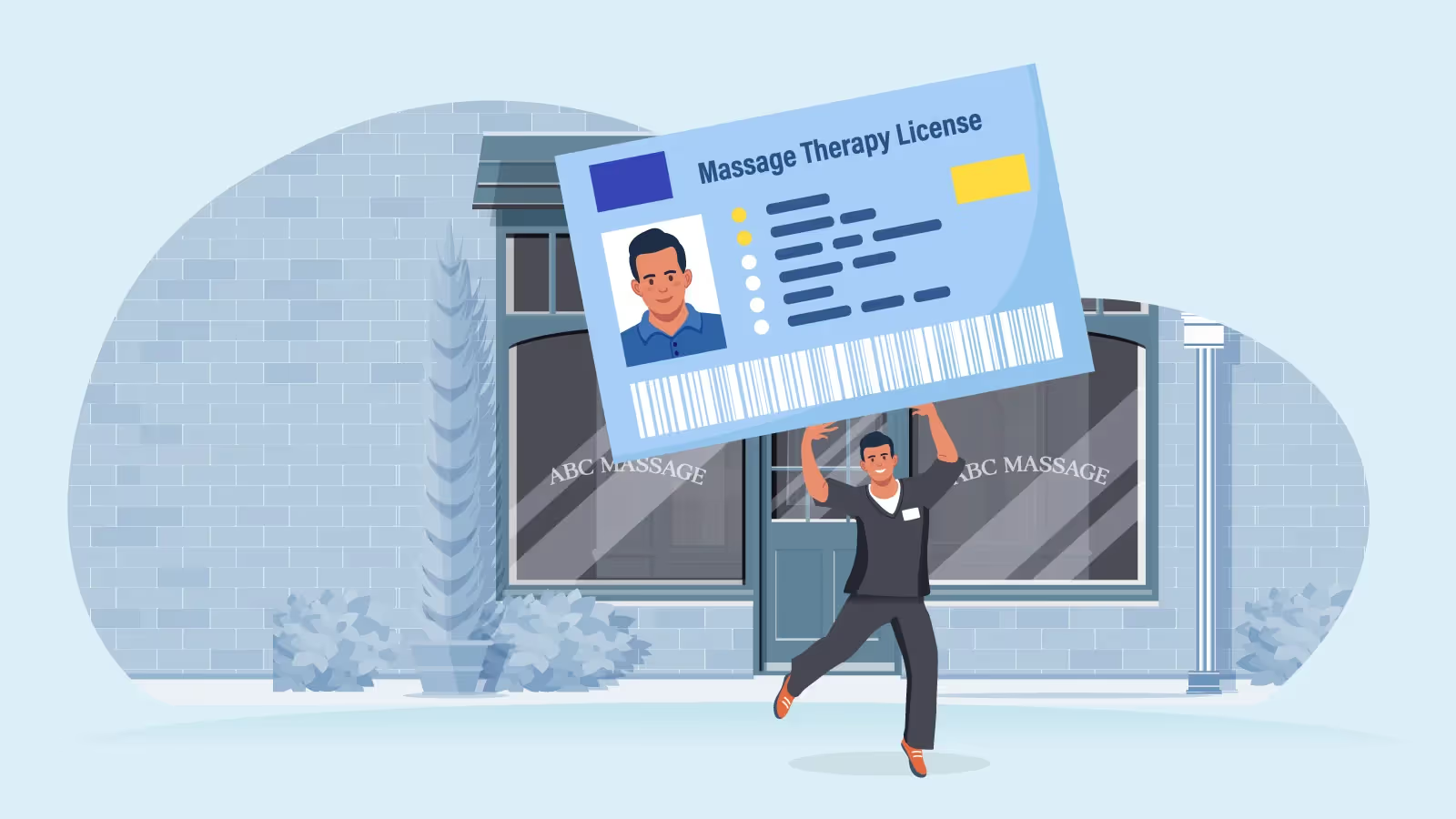
Starting a massage therapy business means handling two separate licensing requirements, and knowing the difference saves you time and confusion. The wellness industry continues to grow, and massage therapists are in demand. You can earn a solid income, set your own hours, and build something that's truly yours.
According to the Bureau of Labor Statistics, employment of massage therapists is projected to grow 15% from 2024 to 2034. That's much faster than the average for all occupations. Strong projected growth means there is steady demand for licensed massage therapists.
Welcoming your first client starts with getting the right credentials and permits. From there, you'll set up the systems that keep your practice running smoothly.
In this article, you'll learn:
- How to get your massage therapy license in four clear steps
- How to start a massage therapy business from scratch
- The difference between a massage therapy license and a business license (and which ones you need)
Don't worry if this feels like a lot. We'll walk through each step so you know exactly what to do and when.
TL;DR: To start a massage therapy business, you need both a massage therapy license (professional credential) and a business license (government permit to operate). Get your therapy license by completing an accredited program, passing the MBLEx or NCBTMB exam, and renewing annually. Then register your business, file permits with your city and state, and set up your practice operations.

4 Steps To Get Your Massage Therapy License
Getting your massage therapy license is a clear process. The details vary by state, but here's the general path you'll follow:
Step 1: Find Out The Requirements In Your Area
Every state (and some cities) sets its own rules for massage therapy licensing. Before you enroll in a program or book an exam, find out exactly what your area requires.
Here's how to get started:
- Check the American Massage Therapy Association (AMTA) website. They publish a state-by-state licensing guide that covers education hours, exams, and fees for each state.
- Contact your state's massage therapy licensing board directly. They can tell you the current requirements, accepted exam types, and any recent changes to the rules.
- Ask about reciprocity. If you're already licensed in one state and planning to move, some states accept out-of-state licenses. Others require additional steps. Find out before you relocate.
Taking 30 minutes to research now can save you months of backtracking later.
Step 2: Complete An Accredited Massage Therapy Program
Most states require you to graduate from an accredited massage therapy school. Find a massage school in your area through the AMTA. Here's what to expect:
- Program length: Most programs require between 500 and 1,000 hours of coursework, depending on your state's requirements. Some states require as many as 1,000 hours, while others accept 500.
- What you'll study: Core subjects typically include massage techniques, anatomy and physiology, kinesiology, pathology, ethics, and business practices.
- Choosing a school: Make sure the school is accredited by a recognized body and that its program meets your state's specific hour requirements. Ask the school directly whether their graduates are eligible for licensure in your state.
This is the biggest time and financial investment in your licensing journey, so choose a program that sets you up for success.
Step 3: Pass The Required Licensing Exam
After completing your program, you'll need to pass a national or state exam. The two most common exams are:
- MBLEx (Massage & Bodywork Licensing Examination): administered by the Federation of State Massage Therapy Boards. This is the most widely accepted exam across the United States.
- NCBTMB exams: offered by the National Certification Board for Therapeutic Massage & Bodywork. Some states accept or require these certifications.
Check which exam your state accepts before you register. Most exams are computer-based and can be scheduled at testing centers near you. Give yourself enough study time — practice tests and study guides are available through both organizations.
Step 4: Maintain Your License
Getting your license is a milestone, but keeping it active is an ongoing responsibility. Here's what that looks like:
- Renew on schedule. Most states require annual or biennial renewal. Mark the renewal date on your calendar so you don't accidentally let your license lapse.
- Complete continuing education (CE) hours. Most states require a set number of CE hours each renewal period. These courses help you stay current on techniques, ethics, and safety practices.
- Keep your records organized. Save copies of your CE certificates, renewal confirmations, and any correspondence with your licensing board. Having everything in one place makes renewals easy.
Staying on top of renewals and continuing education keeps your license in good standing, and keeps you focused on growing your practice.
.avif)
How To Start A Massage Therapy Business
Once you're licensed, it's time to build your business. Here are six steps to get your practice off the ground:
Step 1: Estimate Your Start-Up Costs
Before you spend anything, map out what it will cost to launch. Estimate the start-up cost for a massage business and the monthly expenses for a massage business. Having a clear picture of your numbers helps you make smart decisions and avoid surprises. Consider these categories:
- One-time start-up costs: massage table, linens, oils and lotions, office furniture, signage, website setup, initial marketing materials, and any deposits for your space.
- Monthly recurring expenses: rent or mortgage, utilities, insurance (liability and business), supplies, software, marketing, and continuing education.
- Your income needs: How much do you need to earn each month to cover personal expenses? This helps you set realistic session pricing and client volume goals.
If the total feels high, look into financing options. Small business loans, grants for massage therapy, and low-interest credit lines can help bridge the gap. Your local SBA office is a great place to start exploring options. The SBA business guide walks you through available programs step-by-step.
Step 2: Write Your Business Plan
A business plan doesn't need to be long or complicated. It's simply a written-down version of your strategy. Here's how to create a massage therapy business plan. At a minimum, cover these areas:
- Your services: What types of massage will you offer? Will you specialize in deep tissue, sports massage, prenatal, or a mix?
- Your target clients: Who do you want to serve? Athletes, office workers, seniors, people recovering from injuries?
- Your pricing: Research what other massage therapists in your area charge. Set your rates based on your experience, location, and the value you provide.
- Your marketing approach: How will clients find you? Think about a website, social media, local directories, referral partnerships, and community events.
- Your financial projections: Estimate your monthly revenue, expenses, and break-even point for the first year.
Writing it down forces you to think through the details and gives you a roadmap to follow.
Step 3: Find Your Practice Location
Where you work has a big impact on your costs, your client experience, and your daily routine. Here are the most common options:
- Home-based practice: Low overhead and no commute. Check your local zoning laws and any homeowner's association rules. You may need a home occupation permit.
- Renting a room in an existing clinic or spa: A good middle ground. You get a professional setting without the full cost of your own space. Look for locations with shared waiting areas and good foot traffic.
- Your own dedicated office or studio: Full control over your space and branding. Higher costs, but it gives you room to grow and add staff later.
- Mobile massage: You go to the client. Low overhead, but factor in travel time, transportation costs, and the need for portable equipment.
- Corporate or on-site massage: Partnering with companies to get corporate chair massage clients. This can be a steady income stream alongside your main practice.
Think about where your target clients are and what kind of experience you want to create. You can always start small and upgrade your space as your client base grows.
Step 4: File Your Business Paperwork
This is where the business license steps come together. Here's your checklist:
- Choose your business structure. Most solo massage therapists start as a sole proprietorship or a single-member LLC. An LLC offers personal liability protection, which is worth considering. Talk to an accountant or a small business advisor if you're unsure.
- Register your business name. If you're operating under any name other than your own legal name, you'll need to file a "Doing Business As" (DBA) registration with your state or county.
- Get your business license. Apply for the necessary permits with your city, county, and state as outlined in the sections below.
- Get an Employer Identification Number (EIN). Even if you don't have employees, an EIN is free from the IRS and useful for opening a business bank account and filing taxes.
- Open a business bank account. Keep your personal and business finances separate from the start. This makes bookkeeping, taxes, and financial tracking much simpler.
- Get business insurance. Professional liability insurance protects you if a client claims injury. General liability insurance covers accidents at your location. Many professional associations offer group rates for massage therapists.
Take these steps one at a time. Once the paperwork is filed, you'll have a solid legal foundation for your practice.
Step 5: Set Up Your Practice Operations
Once you're licensed and your paperwork is filed, the biggest challenge shifts from legal setup to daily operations. With your space secured, it's time to set up the systems that will keep your practice running smoothly every day. Think about:
- Appointment scheduling: How will clients book sessions? A reliable online booking system lets clients book their own sessions 24/7 — so you never miss a booking while you're with a client.
- Client intake: New clients need to fill out health history and consent forms before their first session. Having a process that handles this automatically means less paperwork on arrival day.
- Documentation: SOAP notes (that stands for Subjective, Objective, Assessment, Plan) help you track each client's condition and treatment history. Good notes improve your care and protect you professionally.
- Payment processing: Decide how you'll accept payments: cash, card, online. Make it easy for clients to pay.
- Client communication: Appointment reminders reduce no-shows. Follow-up messages after sessions show clients you care and encourage rebooking.
Setting up these systems before you open your doors means you can focus on what you do best: helping your clients feel better.
Step 6: Grow Your Practice
Getting clients in the door is one thing. Building a thriving, sustainable practice takes ongoing effort. Here are proven ways to grow:
- Build an online presence. Learn how to market yourself as a massage therapist. Create a simple, professional website. Set up profiles on Google Business and relevant local directories. Post helpful content on social media to stay visible.
- Ask for reviews and referrals. Happy clients are your best marketing. Make it easy for them to leave reviews and refer friends. Consider a simple referral incentive, like a discount on their next session.
- Expand your skills. Adding new modalities (like hot stone massage, cupping, or myofascial release) lets you serve more clients and charge premium rates.
- Offer packages and memberships. Recurring revenue from massage packages or monthly memberships creates income stability and keeps clients coming back regularly.
- Network with other professionals. Build relationships with chiropractors, physical therapists, personal trainers, and doctors who can refer clients to you.
- Consider retail. Selling massage retail products like foam rollers, essential oils, or self-care tools can add a secondary income stream.
Growth doesn't happen overnight, but each small step compounds over time. Stay consistent, keep learning, and focus on delivering an excellent client experience. Once you've built up your clientele, you can start thinking about when to hire a massage therapist to join your team.
Which Do You Need: A Massage Therapy License Or A Business License?
These two documents sound similar, but they serve very different purposes. Let's break it down.
- A massage therapy license is your professional credential. It proves you've completed the required training and passed an exam. Think of it as your permission to practice massage therapy.
- A business license is a government permit that allows you to operate a business in a specific city, county, or state. It has nothing to do with your massage skills — it's about running a legal business.
Here's the key: many massage therapists need both. If you work for someone else, you typically only need your massage therapy license. The moment you start seeing your own clients or open your own practice, you'll likely need a business license too.
Let's look at each one in more detail.
.avif)
When Do You Need A Massage Therapy License?
You need a massage therapy license any time you're performing massage therapy on clients, whether you work for a spa, a clinic, or yourself. Here are the most common situations:
- You're employed as a massage therapist. Even if someone else owns the business, you still need your own professional license to practice.
- You're self-employed and seeing your own clients. Whether you work from home, rent a room in a shared clinic, or offer mobile massage, your license is required.
Where To Display Your License
Most states require you to display your massage therapy license inside the location where you practice. If you run a mobile massage business, you may need to carry it with you or have it available to show clients on request.
Why Your License Number Matters On Invoices
It's a good practice to include your massage therapy license number on all client invoices. This is especially important if your clients use insurance to pay for their sessions. Insurance companies often require the therapist's license number for reimbursement. Adding it to every invoice from the start saves you time and keeps your records clean.
When Do You Need A Business License For Massage Therapy?
A business license comes into play when you're operating a business, not just practicing massage. You'll need one if:
- You own a massage therapy practice. Whether it's a solo operation or a multi-therapist clinic, you need a permit to run that business in your area.
- You see private clients on the side. If you're employed at a spa but also take your own clients after hours, that side work counts as a separate business.
What A Business License Actually Covers
A business license is a permit issued by your local government that says you're allowed to operate a business within their jurisdiction. The specific requirements vary depending on where you live, so it's important to check with your local authorities.
How To Find Out What Your Area Requires
Here's a quick checklist to help you figure out what you need:
- Contact your city or town clerk's office. Ask what permits are required to operate a massage therapy business at your address. Some cities require a general business license, a home occupation permit, or both.
- Check with your county government. Certain counties have additional permit requirements, especially if you'll be collecting sales tax. You may need a vendor's license or sales tax permit.
- Look into state requirements. If you're operating under a business name (like "Healing Hands Massage") or forming an LLC, you'll need to register with your state's Secretary of State office.
- Visit your local SBA office. They offer free guidance and can help you identify every permit and registration you need in your specific area.
Don't try to guess what's required. A quick phone call or visit to your local offices can save you from fines or delays down the road.
How ClinicSense Helps You Set Up Your Practice
Once you're licensed and your business is registered, the day-to-day admin can feel overwhelming. ClinicSense acts as your silent business partner, handling the operational details so you can focus on your clients from day one.
Here's what ClinicSense takes care of for you:
- Online booking: Let clients schedule their own appointments 24/7 through your personalized booking page.
- Automated appointment reminders: Reduce no-shows with automatic email and text reminders sent before each session.
- Digital intake forms: New clients fill out health history and consent forms online before they arrive — no clipboards, no paper chase.
- SOAP notes and treatment documentation: Keep detailed treatment records for every session, organized and easy to access.
- Client communication tools: Send follow-up messages, rebooking prompts, and important updates without the manual effort.
ClinicSense is built specifically for health and wellness practitioners, so everything is designed around the way you actually work.
Free Resources To Help You Get Started
- Massage Business Setup Checklist — A step-by-step checklist covering everything you need to launch and grow your massage business.
- The No-Show Prevention Playbook — Practical strategies to reduce no-shows and protect your schedule from day one.
Ready To Set Up Your Practice?
Ready to set up your massage therapy practice the easy way? ClinicSense handles online booking, appointment reminders, SOAP notes, and client management, so you can focus on your clients.
Enjoy all features free for 14 days. No credit card required. Get started here!
.avif)


Confidently price your massage services and compare your rates in your area. Get our FREE report delivered to your inbox.
.avif)
Frequently Asked Questions
How Long Does It Take To Get a Massage Therapy License?

How Much Does a Massage Therapy License Cost?
Do I Need a Business License If I Work From Home?
What Is the Difference Between the MBLEx and NCBTMB Exams?
Should I Form an LLC for My Massage Therapy Business?
What Insurance Do I Need To Start a Massage Therapy Practice?

ClinicSense Content Studio develops educational resources for health and wellness professionals who want to run stronger, more sustainable businesses. We focus on clear, trustworthy guidance across marketing, operations, client experience, and practice growth.
Relevant articles


A better way to run your practice.

Start your 14-day free trial today.
