
Massage Therapy Business Tips
Sports Massage Therapy: Techniques, Benefits & Best Practices

Sports massage has evolved.
It is no longer just pre-event prep or post-event recovery.
It is no longer defined by intensity.
And it is not reserved for elite athletes.
In modern practice, sports massage therapy is a goal-oriented approach designed to support performance, recovery, and long-term load management. It blends targeted soft tissue work, mobility integration, and nervous system regulation to meet the demands of physically active clients.
If you’ve ever wondered what sports massage is in today’s clinical setting, the answer is simple: it’s strategic massage.
It’s about understanding training cycles.
It’s about tracking tissue response.
It’s about adapting techniques based on timing and purpose.
Whether you’re expanding your skill set, refining your treatment planning, or considering sports massage as part of your professional development, this guide breaks down the techniques, benefits, and best practices shaping sports massage in 2026.
TL;DR: Sports massage therapy isn’t just “deep massage for athletes.” It’s a goal-driven approach that supports recovery, performance, and injury prevention. Sessions are adapted based on timing, tissue response, and training load — blending soft tissue work, mobility, and nervous system regulation. And it’s just as relevant for active adults as it is for competitive athletes.
What Is Sports Massage?
Sports massage is a goal-oriented form of massage therapy designed to support recovery, performance, and injury prevention in physically active clients.
It is not a single technique.
It is a clinical approach.
Sports massage therapy is defined by:
- The type of client
- The demands placed on their body
- The performance or recovery goal
In other words, it’s not about mastering one specific modality.
It’s about understanding load, adaptation, and outcome.
Sports Massage Is About Context
A sports massage session looks different depending on:
- Timing (pre-event, post-event, in-season, off-season)
- Tissue state (acute fatigue, chronic tightness, reactive tone, soreness)
- Training load (intensity, frequency, progression)
- Recovery capacity
- Client goals
Those goals may include:
- Preparing for a competition
- Recovering from a marathon
- Maintaining tissue quality during a heavy training block
- Preventing overuse injuries
- Returning to activity after time off
- Leveling up into a new sport or higher intensity
This is why sports massage is often misunderstood.
It’s not just “massage for athletes.”
It’s massage designed for people whose bodies are under repeated physical demand.
That includes:
- Competitive athletes
- Recreational endurance runners
- CrossFit or strength training enthusiasts
- Pickleball players
- Manual laborers
- Active adults increasing activity in midlife
Sports Massage Is Outcome-Focused
The defining characteristic of sports massage therapy is intentional technique selection.
You are not chasing tension.
You are supporting adaptation.
That may mean:
- Stimulating techniques before activity
- Down-regulating work post-event
- Targeted tissue loading during maintenance
- Mobility integration
- Reassessment throughout the session
Many practitioners integrate movement assessment, range-of-motion testing, and reassessment between treatment segments, which makes writing detailed SOAP notes essential. Sessions evolve in real time based on tissue response.
In modern practice, sports massage overlaps with:
- Load management
- Recovery science
- Nervous system regulation
- Performance longevity
It is closely related to what some refer to as sports recovery massage, particularly in post-event and high-load scenarios where restoring tissue function and managing inflammation are priorities.
At its core, sports massage is about understanding:
- What the client is asking their body to do
- How their tissues are responding
- What intervention best supports their next phase of training
It’s not a deeper massage.
It's a smarter massage.
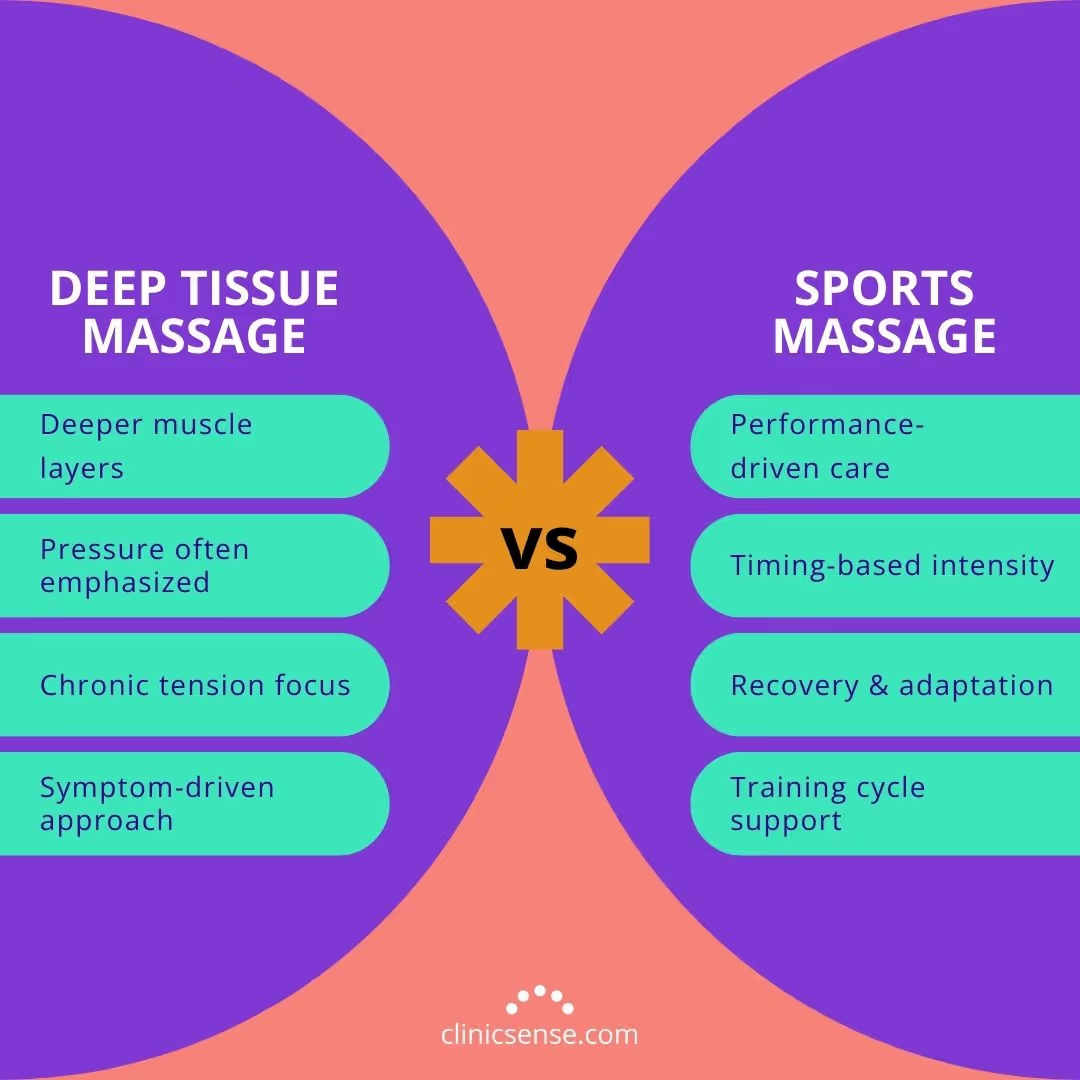
Sports Massage vs Deep Tissue Massage
What’s the difference between sports massage and deep tissue massage?
Deep tissue massage is pressure-focused.
Sports massage is outcome-focused.
This is one of the most misunderstood comparisons in massage therapy.
Deep Tissue Does Not Mean “Deep Pressure”
The term deep tissue massage gets thrown around constantly by clients and therapists.
Many people assume:
Deep = more pressure
More pressure = better results
That’s not accurate.
Deep tissue refers to working with deeper anatomical layers, not simply pushing harder.
Sometimes that requires increased pressure.
Sometimes it does not.
The “no pain, no gain” mentality can be especially problematic with sports massage clients. Many physically driven individuals equate discomfort with effectiveness. That mindset does not align with modern sports massage therapy.
Sports Massage Is Strategic, Not Necessarily Deeper
Sports massage may use deep tissue techniques if they support the client’s goals and tissue presentation.
But pressure is not the objective.
Adaptation is.
In sports massage, you might use:
- Light, stimulating techniques pre-event
- Slower, down-regulating work post-event
- Targeted tissue loading during maintenance
- Mobility integration
- Range-of-motion reassessment mid-session
- Even education on pacing and recovery
A session might include elements similar to deep tissue work.
Or it might focus on mobility and movement integration, including assisted stretching techniques.
The difference is intent.
Managing the “No Pain, No Gain” Mindset
Highly driven clients often want you to “dig in.”
Your role is to determine:
- What the tissue actually needs
- What phase of training they’re in
- What response you’re trying to create
Experienced athletes tend to understand their bodies and training cycles. They are often more receptive to appropriate intensity.
Newer athletes or high-performing professionals may expect intensity because they believe discomfort equals effectiveness.
That’s where education matters.
Explaining what you’re doing and why helps clients understand:
- The difference between pressure and purpose
- How technique selection affects performance
- Why appropriate stimulus produces better long-term outcomes
Client education also strengthens trust and alignment around expectations. That alignment is part of delivering the true benefits of massage in an athletic context.
Sports massage therapy is not defined by how deep you go.
It is defined by:
- Why you choose the technique
- When you apply it
- How it supports the client’s training cycle
It’s not about depth.
It’s about direction.
Core Sports Massage Techniques
There are no exclusive “sports massage techniques.”
Sports massage therapy is defined by clinical reasoning and sequencing, not by a fixed list of strokes.
Any modality you’ve trained in can be used if it supports:
- The client’s goals
- Their training phase
- Tissue presentation
- Recovery status
Sports massage is about selecting the right input at the right time.
Below are commonly used techniques and how they function within a sports massage framework.
Effleurage
Long, gliding strokes used to warm tissue and assess tone.
Why it’s used:
- Increases circulation
- Prepares tissue for focused work
- Assesses reactivity and guarding
- Supports down-regulation post-event
Foundational, but essential for sequencing and reassessment.
Petrissage
Kneading, lifting, and compressive techniques that mobilize muscle tissue.
Why it’s used:
- Improves local circulation
- Reduces muscle tightness
- Prepares tissue for deeper or more specific work
- Supports maintenance sessions
Petrissage can be broad or highly specific.
Tapotement
Rhythmic percussion techniques.
Why it’s used:
- Stimulates tissue pre-event
- Increases alertness
- Activates the nervous system
Used selectively, typically in preparation phases.
Myofascial Release
Sustained pressure to improve fascial glide and reduce restriction.
Why it’s used:
- Improves mobility
- Addresses fascial restriction
- Supports repetitive strain recovery
- Integrates well with reassessment
Common in both performance optimization and injury-support work.
Trigger Point Therapy
Targeted pressure applied to hyperirritable muscle tissue.
Why it’s used:
- Reduces referred pain
- Improves range of motion
- Restores muscle function
Most effective when integrated into a broader massage therapy treatment plan, not used in isolation.
Deep Tissue Massage
Focused work directed at deeper muscle layers when indicated.
Why it’s used:
- Addresses chronic tension patterns
- Improves tissue extensibility
- Supports structural balance
Selected based on tissue need not intensity preference.
Cross-Fiber Friction
Friction applied perpendicular to fiber direction.
Why it’s used:
- Tendon irritation
- Ligament involvement
- Early remodeling support
- Scar tissue management
Often used in overuse or rehab-support contexts.
Assisted Stretching
Therapist-guided stretching to improve mobility.
Why it’s used:
- Increases range of motion
- Addresses asymmetry
- Reinforces movement patterns
- Improves neuromuscular control
Often integrated when comparing assisted stretching vs massage as complementary strategies.
Proprioceptive Neuromuscular Facilitation (PNF)
Contract–relax or hold–relax stretching techniques.
Why it’s used:
- Improves flexibility
- Enhances neuromuscular coordination
- Supports return-to-sport phases
Best applied when timing and client readiness are appropriate.
Active Release Techniques (ART)
Movement-based soft tissue work combining tension with active motion.
Why it’s used:
- Improves tissue glide
- Reduces adhesion-related restriction
- Restores functional movement patterns
Particularly useful in chronic repetitive-use cases.
Lymphatic Drainage
Light, rhythmic techniques that support lymphatic flow.
Why it’s used:
- Post-event recovery
- Reduce swelling
- Reducing inflammatory congestion
- Supporting parasympathetic activation
Lymphatic massage is especially relevant in recovery-focused sessions.
Technique Selection Is About Sequencing
The techniques themselves do not define sports massage therapy.
What defines it is:
- Timing
- Tissue response
- Load awareness
- Reassessment
A pre-event session may emphasize stimulation and mobility.
A post-event session may emphasize circulation and down-regulation.
A maintenance session may blend deeper work, fascial techniques, and movement integration.
Sports massage is not a checklist.
It is strategic clinical decision-making.

Why Sports Massage Matters In Modern Practice
Sports massage therapy is no longer niche.
It’s no longer reserved for elite athletes.
And it’s no longer just pre- or post-event work.
In 2026, recovery is part of performance. Longevity is part of training. Load management is part of everyday life.
The Active Population Is Growing
More people are:
- Running marathons in midlife
- Training for their first triathlon
- Strength training into their 60s
- Returning to activity after injury
- Managing repetitive strain from work and workouts
The aging but active population is one of the fastest-growing client groups in massage therapy.
These clients are not looking for relaxation alone.
They are looking for results.
This is where sports massage becomes highly relevant.
Recovery Is Now Part Of Performance
The conversation around recovery has evolved.
Athletes and active adults understand that adaptation requires:
- Strategic rest
- Tissue recovery
- Nervous system regulation
- Smart training cycles
Sports massage for recovery supports this process. It helps manage soreness, reduce swelling, restore mobility, and maintain tissue quality during high training loads.
This isn’t about intensity.
It’s about supporting adaptation.
Integration With Allied Health
Modern sports massage often overlaps with:
- Physiotherapy specialties
- Chiropractic care
- Strength and conditioning
- Personal training
Therapists who understand tissue load, healing timelines, and movement patterns are better equipped to collaborate within multidisciplinary settings.
Sports massage functions as a bridge between wellness massage and rehabilitative care.
Professional Growth Opportunity
Sports massage therapy represents a strong opportunity within evolving massage therapist career paths.
As client expectations shift toward performance, prevention, and measurable outcomes, therapists who develop skills in assessment and strategic planning stay aligned with the future of massage.
In many regions, sports massage ranks among the most requested massage modalities for active clients.
It is relevant.
It is adaptable.
And it fits within nearly any practice model.
Whether you’re working in a clinic, private practice, or exploring how to start a massage business, understanding sports massage expands your ability to serve an increasingly active population.
Sports massage matters because activity levels are rising, recovery awareness is increasing, and clients want practitioners who understand both.
It’s not just about working on athletes.
It’s about supporting performance at every level.
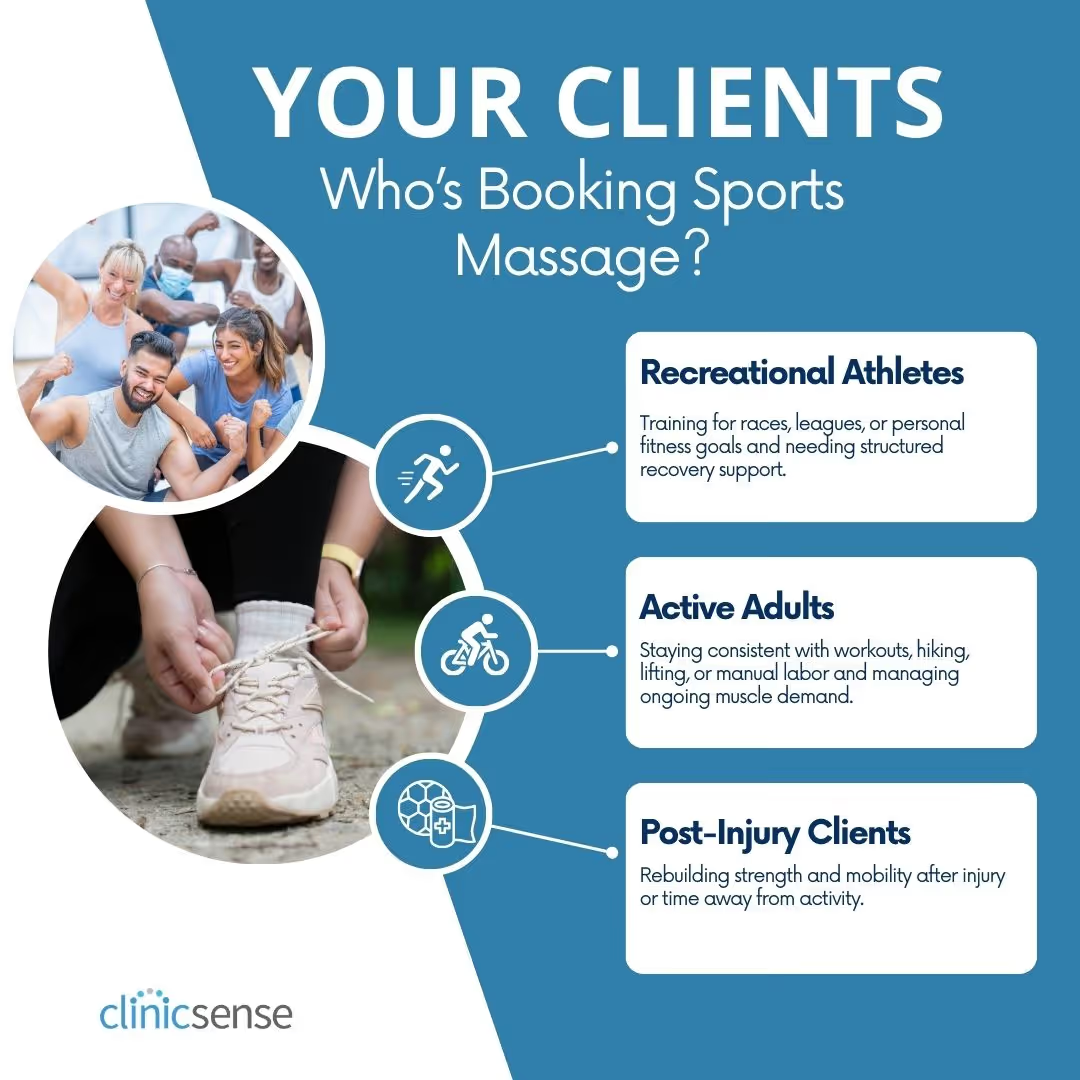
Who Sports Massage Is For (Hint: It’s Not Just Athletes)
Sports massage is often associated with elite competitors.
In reality, most sports massage clients are not professional athletes.
They are active people placing repeated demand on their bodies.
Sports massage therapy is appropriate for:
- Recreational athletes training for races, tournaments, or endurance events
- Active professionals who strength train, cycle, run, or participate in recreational leagues
- Clients with repetitive strain from work, fitness, or sport-specific patterns
- Postural or load-related pain tied to training volume or movement imbalance
- Individuals returning to movement after injury who need gradual tissue adaptation
The common thread is not competition.
It is load.
If a client is asking their body to perform, adapt, or recover from repeated physical demand, sports massage is relevant.
This broader understanding gives therapists confidence to offer sports massage therapy beyond the traditional “athlete only” model.
It’s not about the label.
It’s about the demands placed on the body.
When Sports Massage Is Most Appropriate
Sports massage therapy is most effective when timing and intention are clear. It is not protocol-driven. It is phase-driven.
Pre-Event
Pre-event sports massage is typically shorter and more stimulating.
The goal is to:
- Increase circulation
- Improve mobility
- Activate the nervous system
- Prepare tissue for activity
Techniques are lighter, faster, and purposeful. The objective is readiness not deep tissue change.
Post-Event
Post-event sports massage focuses on recovery.
The goal is to:
- Reduce swelling
- Support circulation
- Down-regulate the nervous system
- Reduce post-exercise soreness
Pressure is typically moderate to light. The focus is restoration, not correction.
Maintenance / Training Cycles
Maintenance sessions occur during active training blocks.
The goal is to:
- Address developing tension patterns
- Maintain mobility
- Support tissue adaptation
- Prevent overload
This is where deeper or more specific work may be appropriate, if aligned with tissue presentation and training load.
Recovery From Overuse
When clients experience repetitive strain or early overload symptoms, sports massage shifts toward support.
The goal is to:
- Reduce irritation
- Improve tissue glide
- Support remodeling
- Modify load response
Sessions are adjusted based on healing timelines and reassessment findings.
Across all phases, the defining factor is intention. Sports massage for recovery, performance, or injury prevention looks different because the goals are different.
Sports Massage Adjacent Modalities
Sports massage therapy often overlaps with other clinical approaches. It does not exist in isolation.
Sports massage adjacent modalities may include:
- Medical massage
- Myofascial therapy
- Neuromuscular therapy
- Mobility-based interventions
- Orthopedic massage
Many of these methods share similar tools but differ in scope, assessment style, and treatment planning.
For example, orthopedic massage may emphasize injury evaluation and special testing. Neuromuscular approaches may focus on motor control. Recovery-based work may prioritize circulatory and parasympathetic effects.
Understanding where sports massage overlaps, and where it differs, strengthens clinical reasoning and helps therapists communicate their services clearly.
In modern practice, these approaches often blend. The key distinction remains the same: technique selection is driven by timing, tissue response, and performance goals.
Documentation & Reassessment In Sports Massage
Sports massage therapy is not a one-off service. It is part of an ongoing performance and recovery plan.
Your clients are already tracking their progress.
They monitor:
- Strength gains
- Endurance improvements
- Flexibility changes
- Race times
- Training volume
- How they feel during and after activity
You should be tracking just as intentionally.
Start With A Thorough Intake
A thorough intake process sets the foundation.
Document:
- Training schedule
- Current goals
- Recent injuries
- Pain or soreness levels
- Competition timeline
Establish baseline measurements when appropriate:
- Range of motion
- Orthopedic tests
- Functional movement patterns
Sports massage is most effective when you reassess each session, not just repeat what worked last time.
Reassessment Drives Clinical Decisions
Each session should include some level of reassessment.
Track:
- Changes in tissue tone
- ROM improvements or restrictions
- Pain patterns
- Load tolerance
- Response to previous techniques
Document what you used and why.
This allows you to:
- Adjust across training cycles
- Modify intensity
- Shift focus during tapering or recovery
- Identify patterns over time
Document Goals — Not Just Techniques
SOAP notes in sports massage should reflect outcomes.
Not just:
“Effleurage, deep tissue, stretching.”
But:
- What the goal was
- What the tissue response was
- What changed
- What the plan is next
Using a structured SOAP note template helps maintain consistency and professionalism.
Sports massage often involves multiple sessions and evolving objectives. Clear documentation supports better communication, better outcomes, and better collaboration with other providers.
Treatment Plans Require Clarity
If a client is training for an event, returning from injury, or managing chronic overload, they are counting on you to be part of their support team.
That means:
- Creating a clear treatment plan
- Articulating the plan
- Updating it as training evolves
- Helping clients adhere to the plan
This is especially important when working on client treatment plans and getting clients to adhere to the treatment plan.
Professional sports massage therapy is not just about skilled hands.
It’s about thoughtful assessment, measurable progress, and structured follow-up.
When documentation and reassessment are consistent, outcomes improve, and clients recognize your value as part of their performance team.
How To Become A Sports Massage Therapist
There is no single path to becoming a sports massage therapist.
You do not need one specific certification.
You do not need to specialize in one technique.
And you do not need to be a professional athlete.
What you do need is clinical curiosity, load awareness, and a genuine interest in the people you want to work with.
Step 1: Strengthen Your Clinical Foundation
Sports massage therapy builds on core massage skills.
That means:
- Strong assessment skills
- Clear treatment planning
- Understanding tissue adaptation
- Confidence in modifying intensity and sequencing
From there, you can deepen your training through sports-focused continuing education.
Options may include:
- Sports Massage CE programs through the AMTA
- Training with the Canadian Sport Massage Therapist Association
- Modality-specific training such as ART seminars
- Courses in recovery science, movement, or nervous system regulation
A formal sports massage certification can strengthen credibility, but it is not always required. Many therapists build strong sports-based practices by layering targeted CEUs into their existing skill set.
Step 2: Understand The Athlete — Not Just The Anatomy
If you want to work with runners, golfers, CrossFit athletes, or weekend warriors, you need to understand what their bodies are doing.
You don’t have to compete in the sport.
But you do need to understand:
- The movement demands
- The common injury patterns
- The mindset and drive
- The seasonal training cycles
For example, if you’re working with golfers experiencing shoulder or elbow pain, it helps to understand the biomechanics of a golf swing. That shoulder issue may be influenced by limited hip rotation or thoracic mobility.
Know the sport.
Know the demands.
Know the client.
This may be more important than any single technique you use.
Step 3: Choose Your Environment
There are many ways to position yourself as a sports massage therapist.
You might:
- Choose a massage room for rent inside a gym or training facility
- Volunteer at local 5Ks or endurance events
- Network with athletic trainers and strength coaches
- Collaborate with physical therapists or chiropractors
- Work with a specific local sports team
You can also niche into one sport if that aligns with your interests. Or you can build a broader practice serving active adults.
There is no one right model.
Step 4: Keep It Practical
Becoming a sports massage therapist does not have to be complicated.
Start with the clients you already see.
Ask:
- What are they training for?
- What does their week look like physically?
- Where are they overloaded?
Then build your education and professional relationships around the population you want to serve.
Sports massage therapy is less about collecting credentials and more about developing clinical reasoning within active populations.
If you understand load, recovery, and adaptation, you are already on the path.
Supporting Sports Massage With The Right Practice Systems
Sports massage therapy often involves multiple sessions, ongoing reassessment, and evolving treatment goals. Clients are tracking their performance. You should be tracking their progress just as carefully.
Clear documentation and accessible client history matter, especially when working across training cycles.
Using reliable Massage therapy software for sports massage supports:
- Online booking for active clients with busy schedules
- Digital intake forms that capture training load and injury history
- Customizable SOAP notes that reflect goals and outcomes
- Treatment packages for structured recovery plans
- Client communication tools that reinforce adherence and follow-up
Flexible documentation and treatment templates make it easier to adjust plans as training changes.
Modern sports massage is outcome-driven. The right systems simply make it easier to support that level of care, whether you’re working with competitive athletes, active adults, or long-term recovery clients.
.avif)


Frequently Asked Questions
What is sports massage?

What is the difference between sports massage and deep tissue massage?
Is sports massage only for athletes?
How do you become a sports massage therapist?
How much do sports massage therapists make?

Beth is a freelance writer, wellness advocate and neuromuscular therapist. She has been writing content for ClinicSense for 7 years, and before that, worked as a massage therapist for over 17 years. Beth takes a data-driven yet human approach to her work.
Relevant articles


A better way to run your practice.

Start your 14-day free trial today.
