
Massage Therapy Business Tips
Sports Massage: 9 Adjacent Modalities, A Practitioners Guide
Sports massage is one of the most powerful ways to build a niche with active clients. It attracts runners, lifters, weekend athletes, and high-performing professionals who want results, not just relaxation.
But as your skills expand, your work can start to feel layered rather than intentional. You take a course, add a technique, and experiment with something new influenced by emerging massage therapy trends. Over time, your sessions may draw from several top massage modalities, yet the bigger framework behind your decisions is not always clearly defined.
This article helps you bring structure to that framework. Inside, you’ll explore:
- How adjacent techniques support different phases of care
- Where additional education can strengthen your sports massage specialty
- How various massage therapy specialties intersect with active populations
- Practical ways to shape your sports massage work into a cohesive, strategic system
Whether you’re refining your current approach or deciding which direction to take next, the goal is simple: help you build a sports massage practice that feels intentional, differentiated, and grounded in clear clinical reasoning.
TL;DR: Sports massage is a structured specialty that adapts across training, recovery, and rehab phases. The most effective therapists layer tissue-focused, movement-integrated, and clinical modalities with intention. Success comes from strategic application, clear documentation, and a cohesive system, not simply adding more techniques.
Understanding Sports Massage As A Clinical Framework
Sports massage is best understood as an organizing framework rather than a single technique.
It adapts based on where your client is in their cycle:
- Pre-event preparation
- Training-phase support
- Post-exertion recovery
- Rehab-adjacent care
Within each phase, your choices shift. Sometimes the limiter is tissue tolerance. Sometimes it is movement efficiency. Sometimes it is an unresolved injury pattern.
The modalities that follow are not separate identities. They are tools layered within sports massage to support performance, recovery, and return to training.
The table below outlines how these approaches commonly fit into active-client care.
Tissue-Focused Modalities
Tissue-focused modalities address mechanical restrictions that limit performance. When the primary barrier is reduced glide, localized tightness, or irritated tissue, these approaches help restore mobility and improve how structures move under demand.
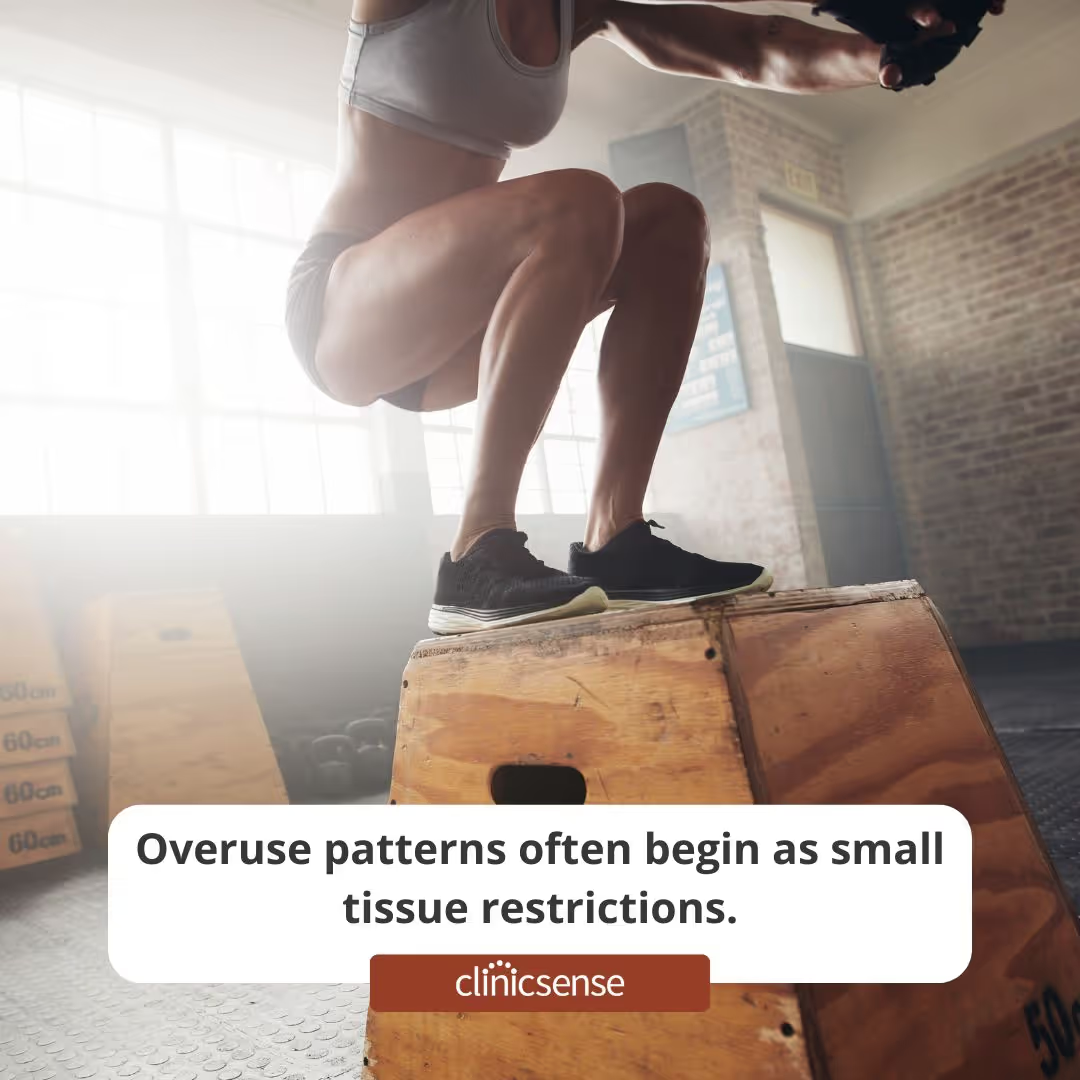
In sports massage, this category supports training consistency and resilience. It is most relevant during high-volume training phases, early signs of overuse, or when specific areas are not adapting well.
Common tissue-focused modalities layered into sports massage include:
- Myofascial Release
- Trigger Point Therapy
- Instrument-Assisted Soft Tissue Mobilization (IASTM)
- Cupping Therapy (Dynamic Application)
1. Myofascial Release
Myofascial release is a slower, sustained approach that targets fascial restrictions affecting mobility and force transfer. In active populations, it is often used when movement feels limited but not acutely injured.
You might integrate myofascial release when a client presents with:
- Persistent tightness that returns quickly after training
- Restricted range of motion without clear joint pathology
- Compensation patterns that limit efficiency
Within sports massage, this work is less about chasing tension and more about improving how tissues glide and interact. It pairs especially well with movement reassessment, allowing you to see whether improved mobility translates into better mechanics.
For therapists looking to refine their sports massage techniques, understanding when to use slower, sustained fascial work versus more targeted interventions can elevate results without adding unnecessary complexity.
2. Trigger Point Therapy
Trigger point therapy is a focused approach used to address hyperirritable spots within muscle tissue that contribute to pain, inhibition, or altered movement patterns.
In active clients, trigger points often show up in two ways:
- Active trigger points reproduce a familiar pain pattern when compressed. The discomfort may refer to another area and often matches what the client reports during activity.
- Latent trigger points do not create spontaneous pain, but they can contribute to fatigue, restricted motion, or a feeling of weakness. When you apply pressure, clients often say, “That’s the strange spot,” even if it is not overtly painful.
Latent trigger points are especially relevant in performance work. A muscle may test weak or feel unreliable under demand, not because it lacks strength, but because neuromuscular coordination is disrupted. Addressing the trigger point can reduce inhibition and restore more efficient activation.
Within sports massage, trigger point therapy supports both pain management and functional improvement. It is particularly useful for overuse patterns, recurring tightness in predictable areas, and situations where improving comfort alone is not enough. The goal is not just relief, but better movement quality under training demands.
3. Instrument-Assisted Soft Tissue Mobilization (IASTM)
Instrument-Assisted Soft Tissue Mobilization, or IASTM, uses rigid tools to assess and treat soft tissue restrictions. The instruments allow you to detect texture changes and apply focused pressure with precision while reducing strain on your hands.
In sports-focused settings, IASTM is often used when:
- A specific area feels dense or fibrotic
- Repetitive training has created localized restriction
- Manual pressure alone feels less efficient
- You want clearer tactile feedback during treatment
The strokes are directional and controlled. The intent is not to create soreness, but to improve tissue glide and tolerance so movement feels smoother under demand.
For therapists considering adding tools to their practice, IASTM represents a structured, performance-oriented option within sports massage. If instrument-assisted work fits your clinical style, these tools may be worth adding to your massage therapy equipment list as you expand your capabilities.
It is not essential for effective sports massage. But for therapists interested in expanding precision without expanding scope, it can be a valuable addition.
4. Cupping Therapy (Dynamic Application)
Cupping therapy uses negative pressure to lift and decompress soft tissue. In sports massage, it is most effective when applied dynamically rather than left stationary.
Instead of simply placing cups and waiting, many therapists integrate movement. The client actively moves through a range while the cups glide or remain anchored over specific areas. This allows you to influence tissue mobility while also observing how the body responds under motion.
Dynamic cupping is often useful when:
- Tissue feels restricted but overly compressed work increases guarding
- Clients respond better to decompression than direct pressure
- You want to influence glide without increasing tenderness
- Movement reassessment is part of your session flow
In active populations, cupping can complement more direct tissue work. It offers another way to address mobility and circulation without relying solely on compressive techniques.
Used thoughtfully, it becomes one more adaptable tool inside a sports massage framework, rather than a standalone service.
Movement-Integrated Modalities
Movement-integrated modalities focus on how the body functions under demand. They move sports massage beyond tissue quality and into coordination, control, and performance carryover.
In active clients, improving mobility is only part of the equation. The real question is whether that mobility translates into better mechanics during training. These approaches help bridge that gap.
This category is especially relevant when:
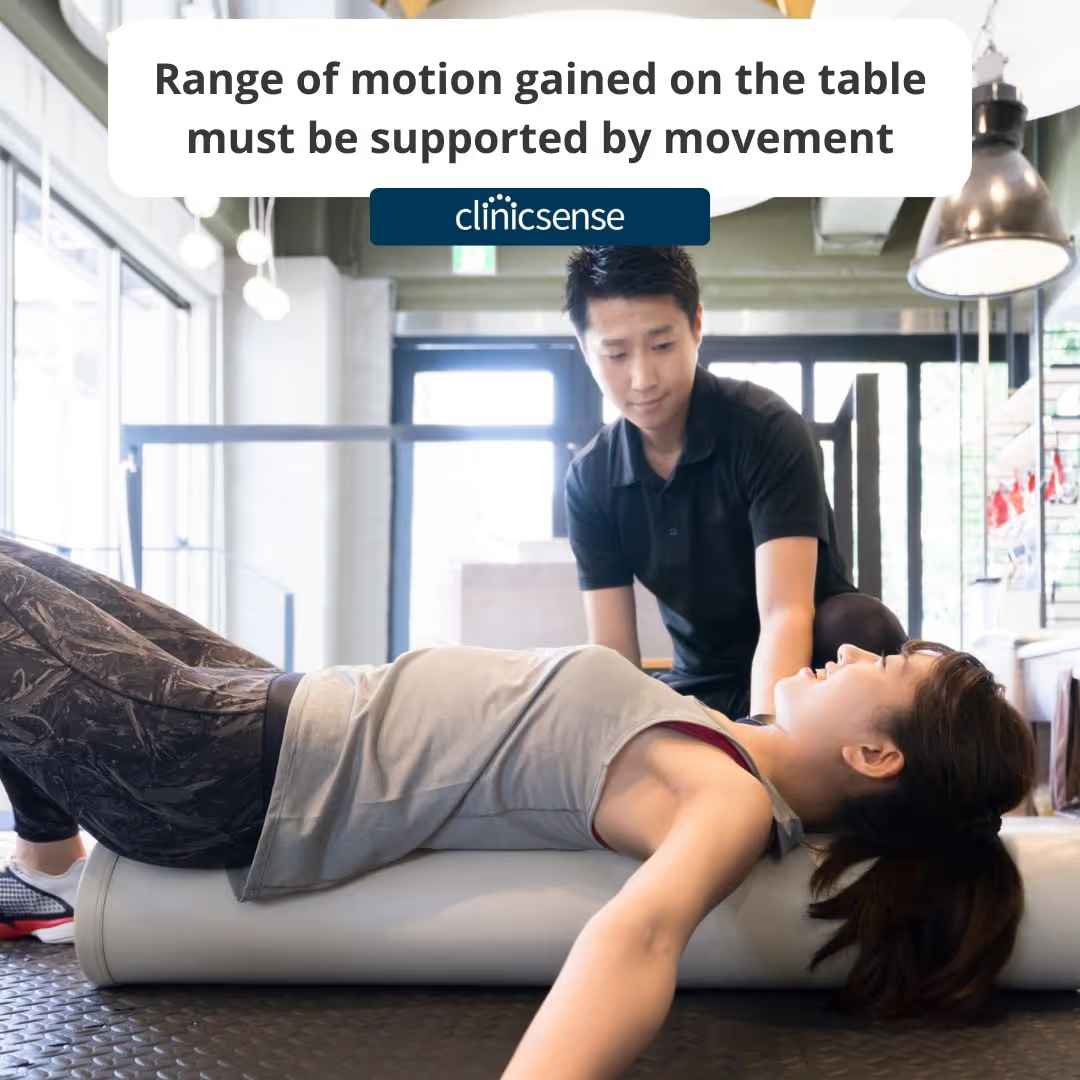
- Range of motion improves on the table but not during activity
- A client reports recurring tightness in predictable patterns
- Performance plateaus despite regular bodywork
Common movement-integrated modalities layered into sports massage include:
- Assisted Stretching and Active Techniques
- Corrective Exercise Integration
5. Assisted Stretching And Active Techniques
Assisted stretching is not a single method. It is a category of movement-based approaches that combine manual support with active client participation.
Within sports massage, this can look very different depending on your training and intent. Some therapists integrate brief stretching sequences into a standard session. Others offer assisted stretching as a standalone service.
Common approaches in this category include:
- Proprioceptive Neuromuscular Facilitation (PNF) stretching
- Muscle Energy Techniques (MET)
- Contract-relax and hold-relax methods
- Active isolated stretching
- Pin-and-stretch techniques
- Reciprocal inhibition strategies
Some methods emphasize resisted contractions followed by increased range. Others focus on controlled, repetitive movement through a specific arc. The common thread is client participation.
This is one of the clearest differences between traditional table work and movement-integrated care. Instead of passively lengthening tissue, you are engaging the nervous system and reinforcing range in a functional way.
For therapists exploring the distinction between assisted stretching vs massage, the key difference lies in intent. Massage addresses tissue quality. Assisted stretching addresses how that tissue performs during movement.
If you want to refine your approach, expanding your understanding of different assisted stretching techniques can significantly enhance your sports massage sessions without changing your overall scope of practice.
6. Corrective Exercise Integration
Corrective exercise bridges the gap between what happens on the table and what happens during training.
In sports massage, it often looks simple. You identify a recurring pattern. You improve mobility manually. Then you reinforce that change with targeted movement.
Corrective strategies may include:
- Motor control drills
- Stability progressions
- Activation work
- Movement retraining under light resistance
The goal is not to turn a massage session into a full workout. It is to support carryover. When clients leave your table with a clear strategy for reinforcing change, results tend to last longer.
That said, this is where understanding your massage therapy scope of practice becomes essential.
Depending on where you practice, suggesting exercises may be fully permitted, conditionally permitted, or limited without additional certification. The distinction often lies in whether you are offering general movement education versus prescribing rehabilitative exercise for a diagnosed condition.
If you are certified in corrective exercise, personal training, or a similar discipline, your scope may be broader. If you are unsure, consult your local regulatory board or professional association for clarity.
For some therapists, integrating corrective exercise is a natural extension of sports massage. For others, building a referral network with athletic trainers or physical therapists may be the more appropriate path.
Either way, the principle remains the same. Movement matters. The question is how you choose to support it within your training, credentials, and local regulations.
Rehab-Adjacent And Clinical Reasoning Modalities
Rehab-adjacent modalities come into play when performance issues move closer to injury management.
In sports massage, this phase is not about replacing physical therapy. It is about recognizing when a client’s needs shift from general training support to more focused, assessment-driven care.
You might lean into this category when:
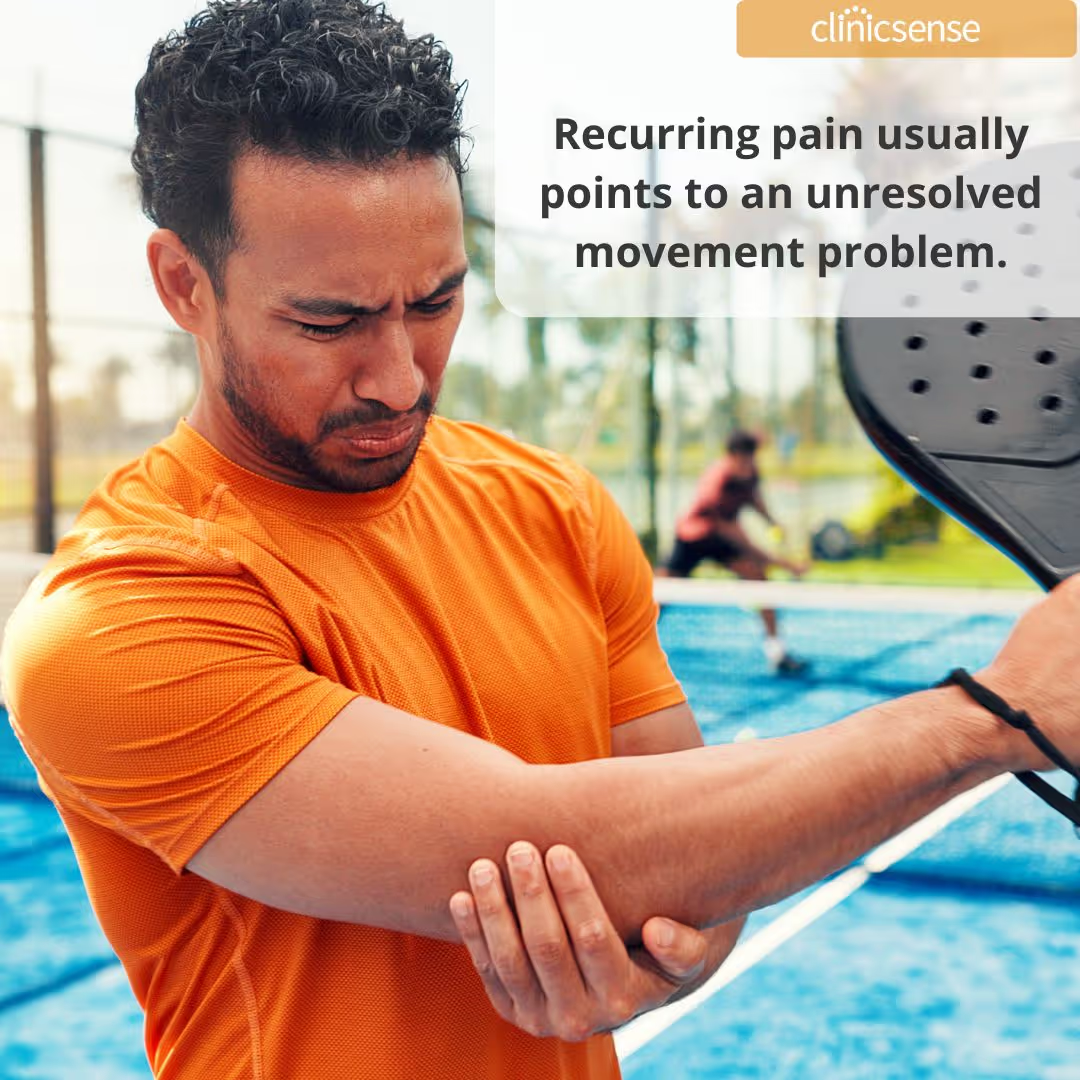
- Pain is recurring in the same pattern
- Progress stalls despite consistent bodywork
- A client is returning from injury
- Referral relationships are involved
These approaches require stronger clinical reasoning and clearer documentation. They often overlap with other healthcare providers and demand a more structured treatment plan.
Common rehab-adjacent modalities layered into sports massage include:
- Precision Neuromuscular Therapy (PNMT)
- Medical Massage
- Manual Lymphatic Techniques
7. Precision Neuromuscular Therapy (PNMT)
Precision Neuromuscular Therapy is an assessment-driven approach to identifying and addressing the root cause of pain and dysfunction.
Unlike generalized deep work, PNMT follows a structured evaluation process. You assess range of motion, isolate involved muscles, test patterns, and treat based on findings rather than symptoms alone.
In sports massage, PNMT becomes especially valuable when:
- Pain keeps returning in the same area
- Range of motion is limited without clear structural damage
- A muscle tests weak despite consistent training
- Compensation patterns suggest something upstream or downstream is contributing
With active clients, pain is often the reason they book the session. But that pain is usually tied to function. Something is not moving, stabilizing, or coordinating the way it should.
PNMT helps you solve that puzzle.
It clarifies whether a restriction is protective guarding, neuromuscular inhibition, or true tissue limitation. Instead of chasing where it hurts, you address why it hurts. The result is not just temporary relief, but more reliable movement under demand.
For therapists looking to elevate their sports massage practice, PNMT strengthens clinical reasoning and brings structure to decision-making inside the session.
8. Medical Massage
Medical massage refers to treatment that aligns with a diagnosed condition, physician referral, or structured care plan. If you’ve ever wondered what is medical massage, the simplest answer is this: it is goal-oriented bodywork designed to address specific pathology rather than general wellness or performance support.
In a sports massage practice, medical massage becomes relevant when a client shifts from training discomfort into injury management. This may include:
- Post-surgical recovery
- Tendinopathies or chronic overuse injuries
- Referral-based treatment plans
- Cases requiring progress tracking and documentation
The techniques themselves may overlap with what you already use. What changes is the structure. Sessions are typically more focused. Goals are measurable. Documentation becomes more detailed.
For therapists considering this direction, the question is not only clinical interest but also positioning. Exploring should you get a medical massage certification requires weighing your client population, referral relationships, local regulations, and long-term career goals.
Medical massage can strengthen a sports-focused practice, especially if you work closely with physicians, athletic trainers, or physical therapists. It does not replace sports massage. Instead, it expands your ability to support clients when their needs move closer to injury care.
9. Manual Lymph Drainage
Manual Lymph Drainage (MLD) is a gentle, rhythmic technique designed to support lymphatic flow and fluid movement. If you’ve explored the lymphatic massage benefits, you know this approach is less about muscle tension and more about managing inflammation and recovery.
Within a sports massage practice, MLD is most relevant when:
- Swelling lingers after intense training or competition
- A client is returning to activity post-surgery
- Tissue feels congested rather than tight
- Recovery timelines need additional support
Unlike deeper mechanical work, MLD uses light pressure and specific directional strokes that follow lymphatic pathways. The intent is to assist fluid movement and reduce inflammatory load, not to mobilize muscle fibers.
For active clients, this can be especially valuable during high-volume training blocks or in the early stages of return-to-play. It is not a replacement for traditional sports massage techniques, but it can be an effective complement when inflammation or fluid retention is part of the presentation.
As with medical massage, proper training is essential. Certified programs ensure you understand contraindications and safe application, particularly in post-surgical or medically complex cases.
Bringing It All Together In Your Practice
Expanding your sports massage skill set is only part of the equation. What ultimately differentiates your practice is how clearly you apply those skills within a system.
When you understand how tissue-focused, movement-integrated, and rehab-adjacent modalities fit together, your sessions become more consistent. Your recommendations become more precise. Your outcomes become easier to explain.
That clarity influences more than treatment results. It shapes how you position your work.
It affects:
- How you communicate the mental and physical benefits of massage to active clients
- How youdesign structured treatment packages for training cycles or recovery phases
- How you think about long-term massage therapist career paths within a performance niche
- How you articulate what makes sports massage a good massage therapy career focus for you
A cohesive approach also requires clean documentation. When your work becomes more assessment-driven or rehab-adjacent, writing clear session notes matters. Whether you are writing SOAP notes, using a structured SOAP note template, or tracking progress across a training block, documentation supports continuity of care and strengthens referral relationships.
This is where systems matter.
Using organized massage therapy software helps you track treatment plans, monitor progress over time, and maintain professional records without adding administrative friction. When your clinical thinking is structured, your practice management should be too.
Sports massage is not just a collection of techniques. It is a specialty built on progression, reasoning, and clear intent. The therapists who stand out are not the ones who know the most modalities. They are the ones who apply them strategically, document them clearly, and communicate their value with confidence.
That is how you elevate your sports massage practice from skilled to cohesive.
.avif)

Frequently Asked Questions
Do I need to learn all nine modalities to specialize in sports massage?

How do I choose which modality to study next?
Is sports massage considered medical massage?
Can I combine assisted stretching and corrective exercise in the same session?
How do I market a sports massage specialty without sounding generic?

Beth is a freelance writer, wellness advocate and neuromuscular therapist. She has been writing content for ClinicSense for 7 years, and before that, worked as a massage therapist for over 17 years. Beth takes a data-driven yet human approach to her work.
Relevant articles


A better way to run your practice.

Start your 14-day free trial today.
